
How to Integrate an IVR System with Your CRM for Better Lead Management
In today’s competitive business environment, generating leads is only half the battle. The real challenge lies in managing those leads effectively, capturing accurate information, responding quickly, and ensuring no opportunity slips through the cracks. For businesses that rely heavily on phone calls, integrating an IVR system with a CRM can significantly improve how leads are handled and converted.
In India, where customer inquiries often begin with a phone call, businesses receive dozens or even hundreds of calls every day. Without a structured system, these calls can become difficult to track, resulting in lost leads, delayed responses, and inconsistent follow-ups. This is where an IVR system in India, when integrated with a CRM, plays a crucial role in streamlining lead management.
This guide explains how Kommuno’s IVR-CRM integration works, why it matters, and how businesses can implement it effectively to improve lead quality, response time, and overall sales performance.
Understanding the Role of an IVR System in Lead Management
An Interactive Voice Response system is often seen as a call-routing tool, but its role in lead management goes much deeper. When designed correctly, an IVR system acts as the first point of interaction between your business and a potential customer.
Instead of answering every call manually, the IVR greets callers, provides menu options, and directs them to the appropriate department. More importantly, it can capture key details during the call journey that are extremely valuable for sales and marketing teams.
In an Indian business context, where calls come from different cities, languages, and customer profiles, the IVR ensures that every inquiry follows a structured path. This structure makes it easier to connect incoming calls with CRM data and convert raw calls into actionable leads.
What Is CRM, and Why Does It Matter for Call-Based Leads?
A customer relationship management system stores and organizes customer data. It tracks interactions, records communication history, and helps sales teams follow up with prospects promptly.
For businesses that generate leads through phone calls, the CRM acts as a central hub where all call-related information can be stored and accessed. However, without IVR integration, many details still have to be entered manually, increasing the risk of errors or missed information.
By integrating Kommuno’s IVR system with your CRM, incoming calls are no longer just conversations; they become data points that support better decision-making and faster conversions.
Why IVR-CRM Integration Is Especially Important in India
The Indian market presents unique challenges that make IVR-CRM integration particularly valuable.
First, call volumes can fluctuate significantly during promotions, festive seasons, or business hours. Second, customers often prefer calling rather than filling out online forms. Third, businesses frequently operate across multiple locations or regions.
An IVR system in India, when connected with a CRM, helps manage these challenges by ensuring every call is logged, categorized, and assigned correctly. This reduces dependency on manual note-taking and allows teams to focus on actual engagement rather than administrative work.
How IVR and CRM Work Together
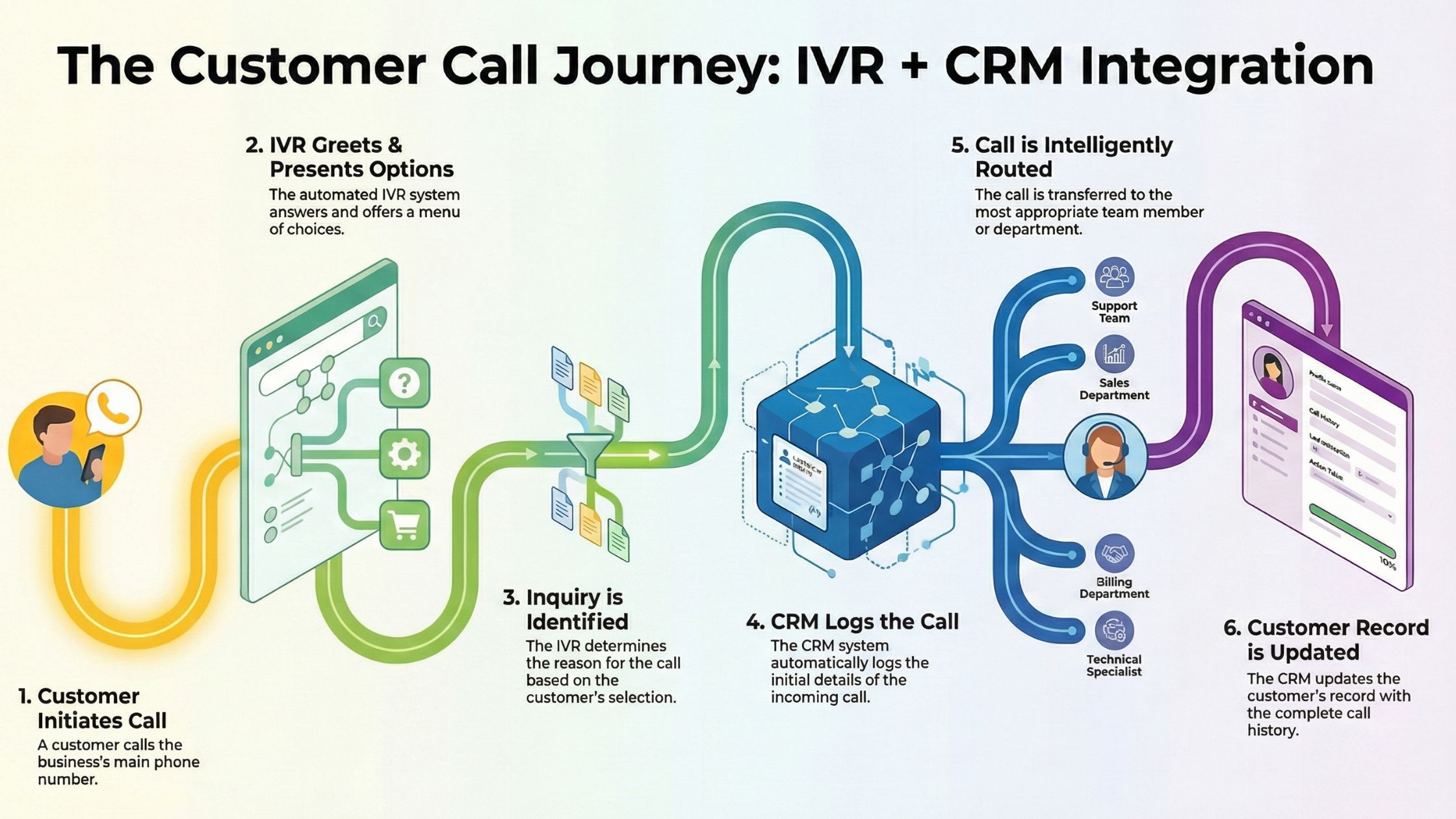
When an IVR system is integrated with a CRM, the two platforms communicate with each other during the call journey. The IVR handles the call flow, while the CRM records and organizes the information collected.
Here’s how the process typically works:
- A customer calls your business number
- The IVR greets the caller and offers menu options.
- Based on the caller’s selection, the IVR identifies the nature of the inquiry.
- The CRM logs the call details automatically
- The call is routed to the appropriate team member.
- The CRM updates the lead record with call history
This integration ensures that no lead remains anonymous or untracked.
Capturing Lead Intent Through IVR Menus
One of the biggest advantages of IVR-CRM integration is the ability to capture lead intent early in the interaction.
For example, an IVR menu might offer options such as
- Press 1 for new inquiries
- Press 2 for existing customers
- Press 3 for pricing information
- Press 4 for support
Each selection tells you something important about the caller’s intent. When this information is passed to the CRM, sales teams can prioritize leads more effectively.
A caller pressing “new inquiry” can be marked as a fresh lead, while someone selecting pricing options may be closer to conversion. This structured data helps teams respond with context instead of starting every call from scratch.
Improving Lead Response Time Through CRM Visibility
Speed plays a major role in lead conversion. The faster you respond to a prospect, the higher the chances of closing the deal.
With IVR-CRM integration, sales teams gain instant visibility into incoming calls. The CRM displays relevant lead details before or immediately after the call, enabling faster follow-ups.
In an Indian business environment like Kommuno, where multiple inquiries may come in at the same time, this visibility prevents delays and ensures that high-priority leads are addressed promptly.
Reducing Lead Leakage with Automated Call Logging
Lead leakage often happens when calls are missed, forgotten, or not recorded properly. Manual tracking can only go so far, especially during busy hours.
An integrated IVR system automatically logs incoming calls into the CRM. Even if a call is missed or disconnected, the record remains available for follow-up. This reduces dependency on memory or handwritten notes and ensures every inquiry is accounted for.
For businesses aiming to work with the best IVR service provider in India, reliable call logging is a key factor that should not be overlooked.
Better Lead Distribution Across Sales Teams
As businesses grow, lead distribution becomes more complex. Without a system in place, leads may get unevenly distributed or delayed.
IVR-CRM integration allows leads to be assigned based on predefined rules such as department, region, or inquiry type. For example, calls related to enterprise sales can be routed to senior representatives, while general inquiries can be handled by inside sales teams.
This structured distribution improves efficiency and ensures that leads are handled by the right people at the right time.
Supporting Multilingual Lead Handling
India’s linguistic diversity makes multilingual support essential. An IVR system that offers multiple language options helps callers feel comfortable and understood.
When this language preference is passed to the CRM, it allows businesses to assign leads to team members who speak the same language. This reduces miscommunication and improves the quality of interactions.
Multilingual IVR-CRM integration is particularly valuable for businesses operating across different states and regions.
Using Call History to Improve Sales Conversations
Every interaction with a lead adds context. When IVR and CRM are integrated, call history becomes easily accessible to sales teams.
Instead of asking repetitive questions, agents can review previous interactions and continue the conversation smoothly. This creates a more personalized experience and builds trust with potential customers.
Over time, this historical data also helps businesses identify patterns, understand customer behaviour, and refine their sales approach.
Managing Business Hours and After-Hour Leads
Not every business operates 24×7, but leads can still come in outside working hours. An IVR system can play a recorded message informing callers about business timings while ensuring the call is logged in the CRM.
This way, no inquiry is completely lost. The next working day, teams can review missed calls and reach out to interested prospects.
This approach allows businesses to maintain professionalism without requiring round-the-clock staff availability.
How to Prepare Your Business for IVR-CRM Integration
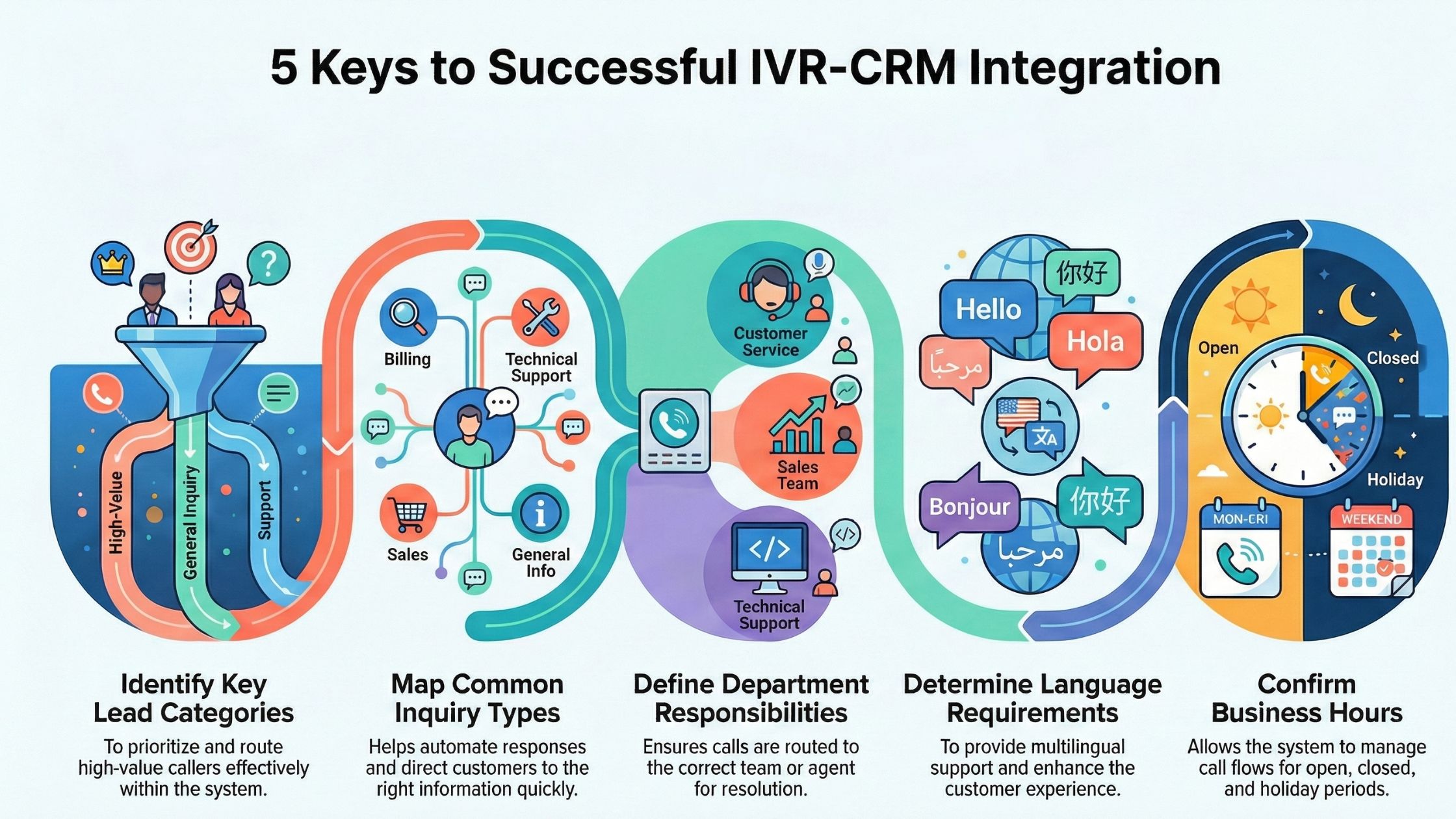
Before integrating an IVR system with your CRM, it’s important to plan your call flow carefully.
Start by identifying:
- Key lead categories
- Common inquiry types
- Department responsibilities
- Language requirements
- Business hours
Once these elements are defined, the IVR menu can be designed to collect relevant information without overwhelming callers.
A reliable provider, such as Kommuno, will help align the IVR structure with your CRM fields to ensure seamless data flow.
Choosing the Right IVR Provider for CRM Integration
Not every IVR provider offers smooth CRM compatibility. When searching for the best IVR service provider in India, businesses should look for providers who understand both communication flow and lead management needs.
Key factors to consider include:
- Ease of integration with your existing CRM
- Clear and customizable IVR menus
- Reliable call routing
- Support for multilingual prompts
- Accurate call logging
- Simple setup and maintenance
A provider with experience in Indian business environments will understand these requirements and deliver a solution that fits real-world usage.
Common Mistakes to Avoid During Integration
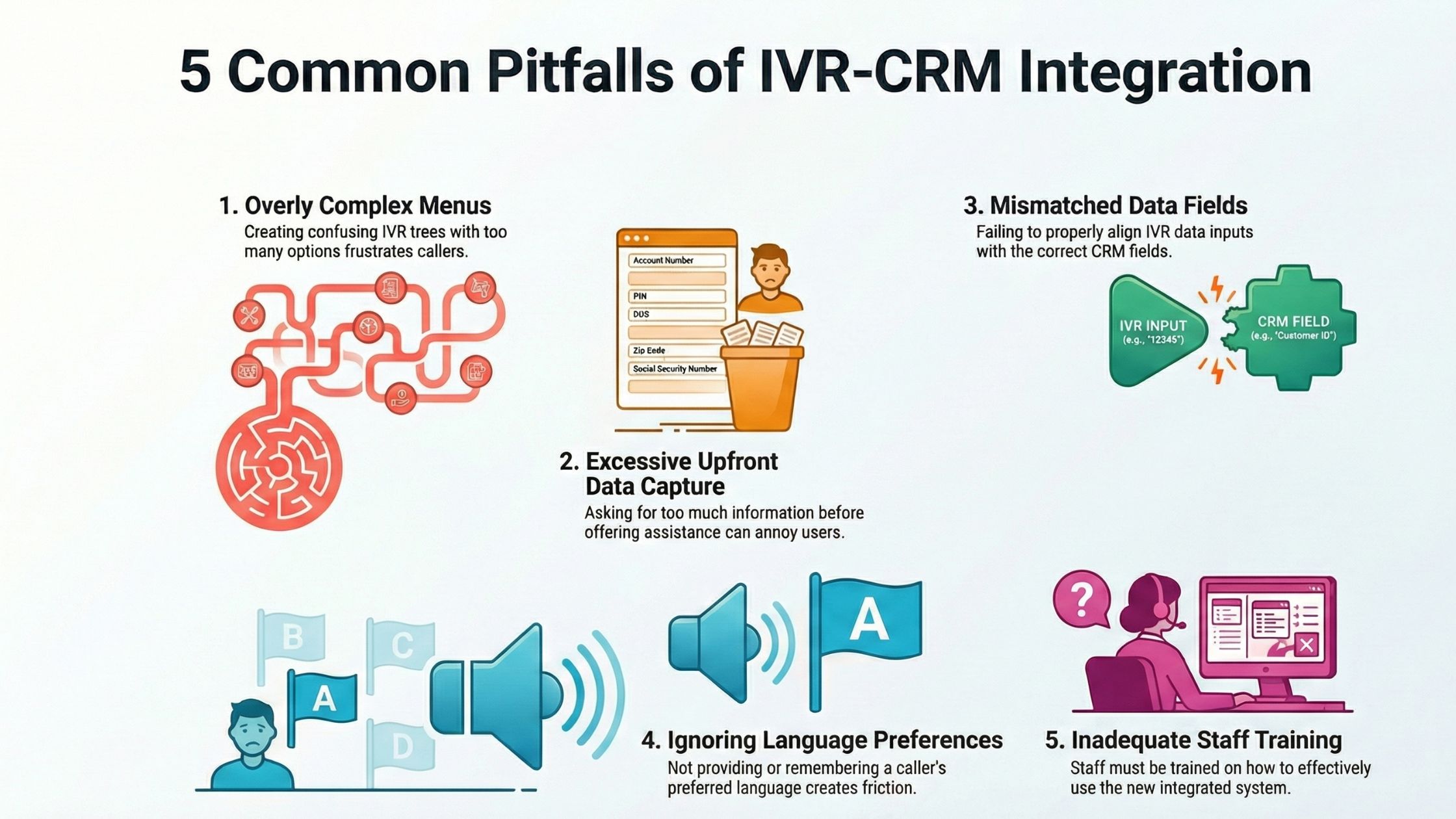
While IVR-CRM integration offers many benefits, poor implementation can reduce its effectiveness. Common mistakes include:
- Creating overly complex IVR menus
- Capturing too much information upfront
- Failing to align IVR data with CRM fields
- Ignoring language preferences
- Not training staff on CRM usage
Keeping the system simple and customer-friendly ensures better results.
Measuring the Impact on Lead Management
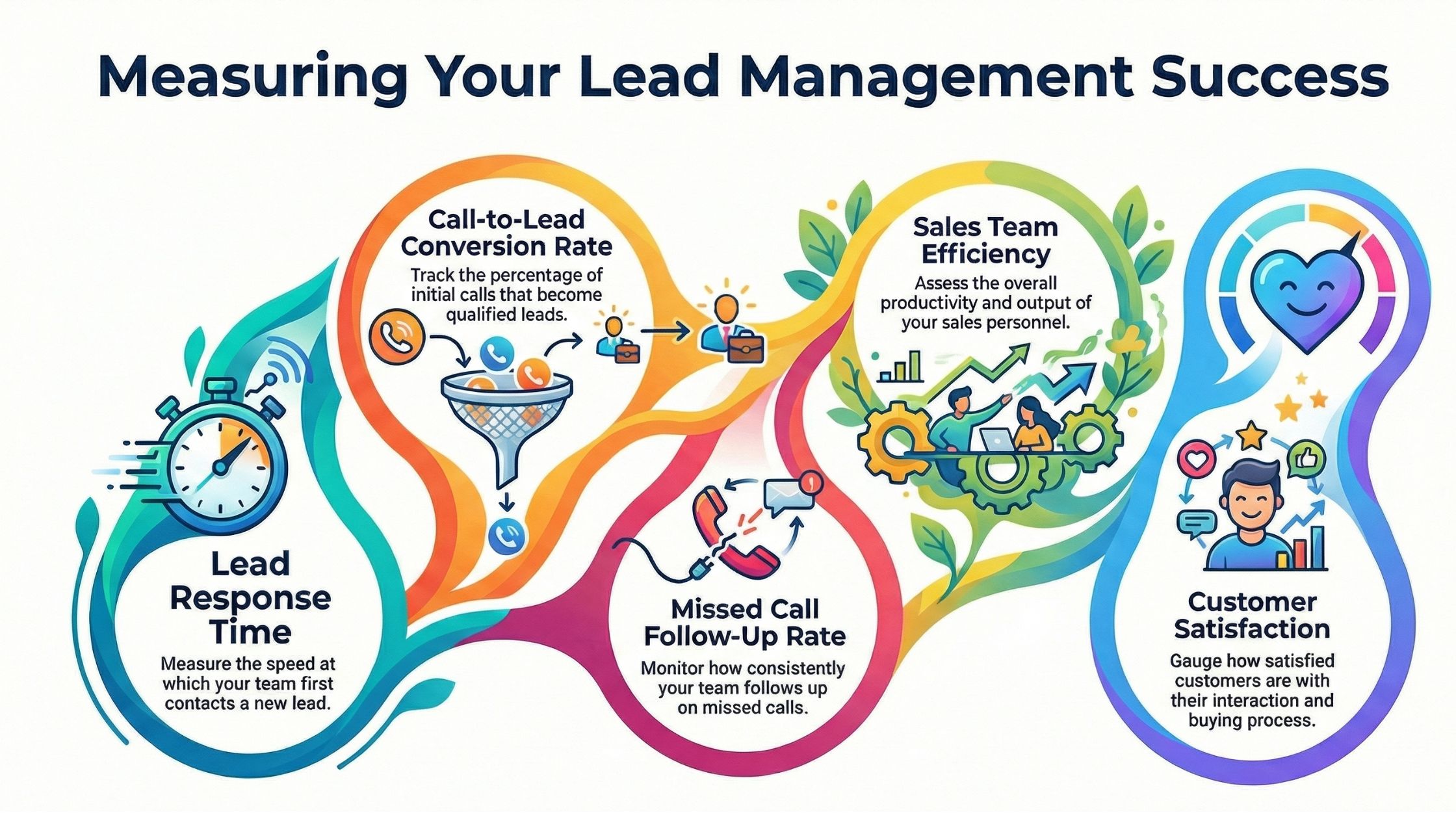
After integration, businesses should monitor key metrics such as:
- Lead response time
- Call-to-lead conversion rate
- Missed call follow-up rate
- Sales team efficiency
- Customer satisfaction
These insights help evaluate how effectively the IVR-CRM setup is supporting lead management goals.
Why IVR-CRM Integration Is a Smart Investment
Investing in IVR-CRM integration is not just about technology; it’s about improving the way your business communicates with potential customers.
For Indian businesses handling high call volumes, this integration reduces manual effort, improves accuracy, and enhances customer experience. It allows teams to work smarter, not harder.
When implemented correctly, it transforms phone calls into structured, actionable leads that drive growth.
Conclusion
An IVR system integrated with a CRM creates a powerful foundation for better lead management. It ensures that every call is tracked, categorized, and followed up on efficiently.
In the context of an IVR system in India, where call-based inquiries remain a dominant communication channel, this integration is especially valuable. It helps businesses manage scale, improve response time, and maintain professionalism at every customer touchpoint.
Choosing the best IVR service provider in India is the key to making this integration successful. With the right setup, businesses can turn everyday phone calls into meaningful opportunities and long-term customer relationships.