
Cloud Telephony Explained: How It Works & 7 Ways It Transforms Business Communication
In today’s fast-moving digital economy, business communication can no longer depend on rigid, hardware-heavy phone systems. Customers expect quick responses, personalized interactions, and seamless experiences across channels. This is where cloud telephony comes in.
For businesses across startups, SMEs, and large enterprises, cloud telephony in India has emerged as a powerful alternative to traditional PBX systems. It offers flexibility, scalability, and advanced features that were once available only to large corporations. In this blog, we will break down what cloud telephony is, how it works, its key features, and the seven most impactful ways it transforms business communication, especially in the Indian market with Kommuno.
What Is Cloud Telephony?
Cloud telephony is a communication system that delivers voice calling and telephony services over the internet instead of traditional phone lines. Unlike on-premise PBX systems that rely on physical hardware, cloud telephony is hosted on remote servers and accessed through web dashboards, mobile apps, or APIs.
In simple terms, it allows businesses to make, receive, track, and manage calls using the cloud, without installing bulky equipment or maintaining complex infrastructure.
A modern cloud telephony solution in India supports inbound and outbound calling, virtual numbers, IVR, call routing, call recording, analytics, and CRM integrations, all from a centralized platform.
How Cloud Telephony Works:
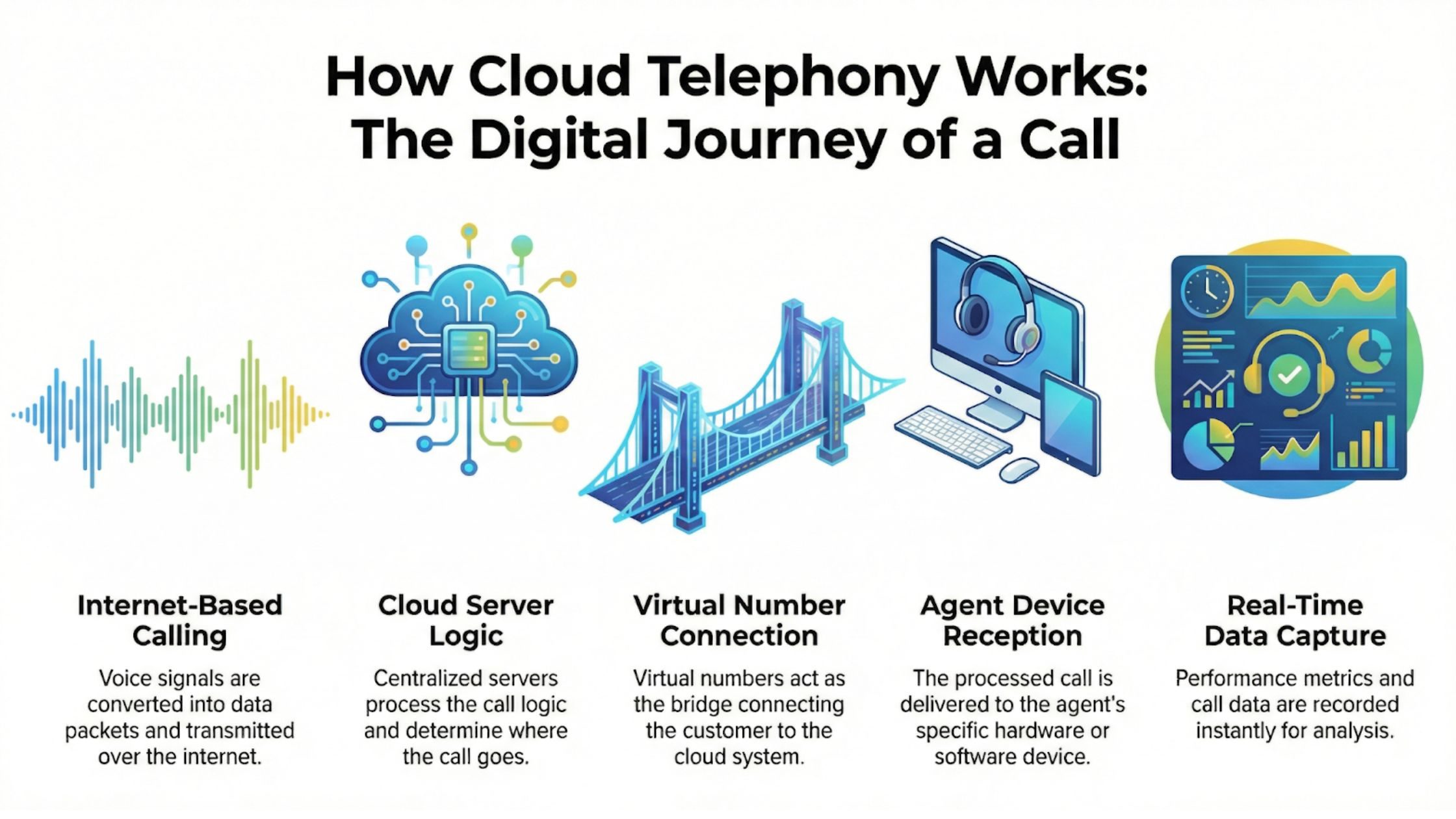
Understanding how cloud telephony works helps businesses unlock its full potential. While the technology behind it is advanced, the user experience is surprisingly simple.
Here’s a step-by-step explanation:
- Internet-Based Calling
Calls are transmitted as data over the internet using Voice over Internet Protocol (VoIP). This eliminates the need for copper wires and physical phone exchanges.
- Cloud Servers Handle Call Logic
The call flow IVR menus, call routing rules, recordings, and analytics are managed by cloud servers hosted by the service provider.
- Virtual Numbers Connect Customers
Customers dial a virtual business number (local, toll-free, or mobile). The system intelligently routes the call to the right agent, team, or department.
- Agent Devices Receive Calls
Calls can be answered on desk phones, mobile phones, softphones, or laptops, allowing teams to work from anywhere.
- Data Is Captured in Real Time
Call duration, recordings, caller details, and outcomes are logged automatically, providing valuable insights for sales and support teams.
This architecture makes cloud telephony highly scalable, reliable, and ideal for businesses operating across multiple cities in India.
Traditional Phone Systems vs Cloud Telephony
Before cloud telephony, businesses relied on traditional PBX systems. While they served their purpose, they also came with limitations.
Traditional Phone Systems:
- Require physical hardware and wiring
- High upfront installation costs
- Limited scalability
- Difficult to support remote teams
- Manual call tracking and reporting
Cloud Telephony Systems:
- No physical infrastructure required
- Pay-as-you-use pricing models
- Easy to scale up or down
- Supports remote and hybrid teams
- Automated reporting and analytics
For growing businesses, the shift to the cloud is not just an upgrade; it’s a strategic move.
Key Features of Cloud Telephony Systems
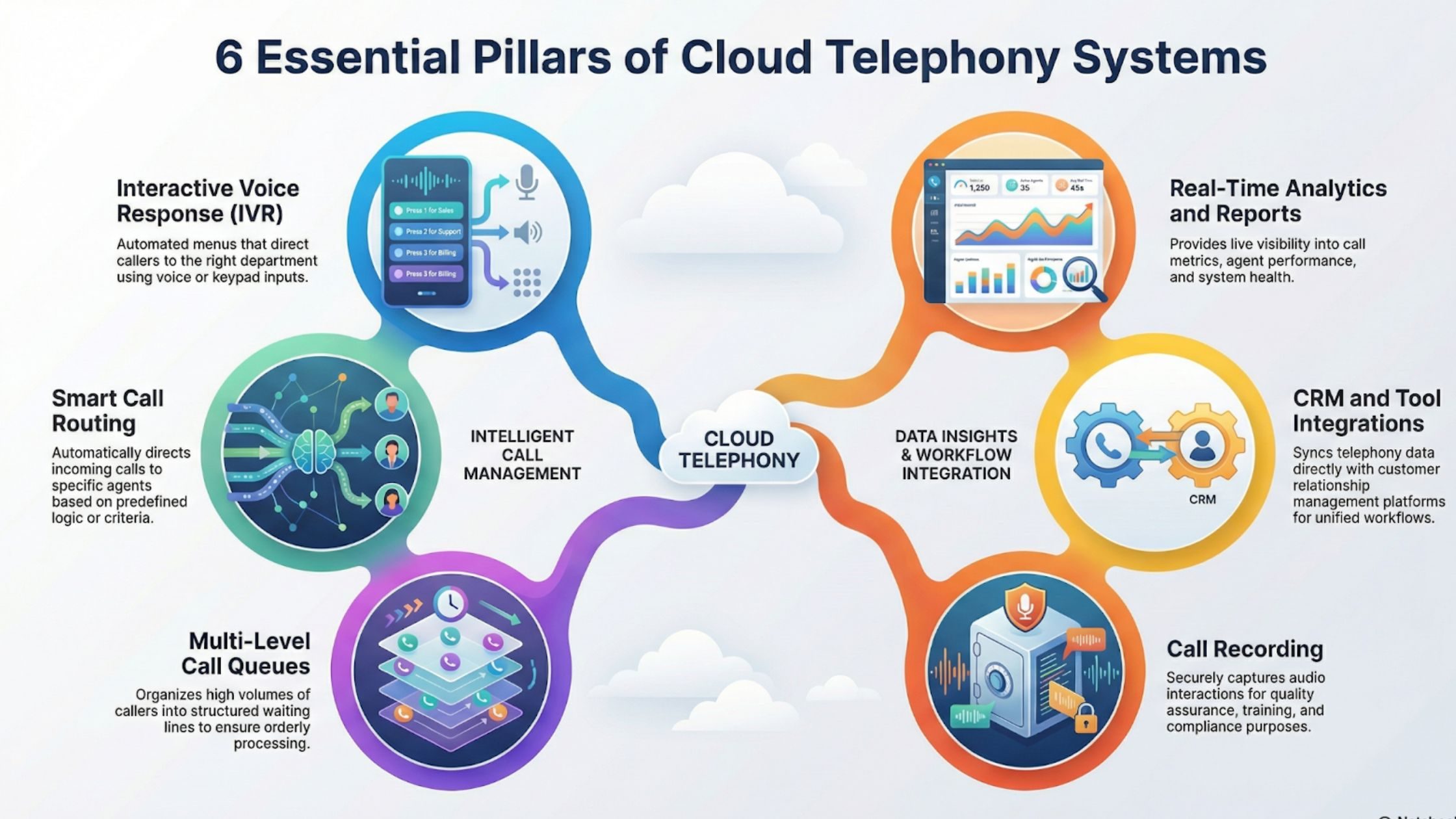
A robust cloud telephony platform offers more than just calling. Below are the core features businesses should understand and actively use.
1. Interactive Voice Response (IVR)
IVR guides callers through automated menus, helping them reach the right department without manual intervention.
2. Smart Call Routing
Calls can be routed based on agent availability, business hours, geography, or customer history.
3. Call Recording
Businesses can record calls for quality assurance, compliance, training, and dispute resolution.
4. Real-Time Analytics and Reports
Managers can track call volumes, response times, missed calls, and agent performance from a live dashboard.
5. CRM and Tool Integrations
Kommuno’s cloud telephony integrates seamlessly with CRMs, helpdesk software, and marketing tools to create a unified workflow.
6. Multi-Level Call Queues
Ensures high call volumes are managed efficiently without overwhelming agents or losing customers.
7 Ways Cloud Telephony Transforms Business Communication
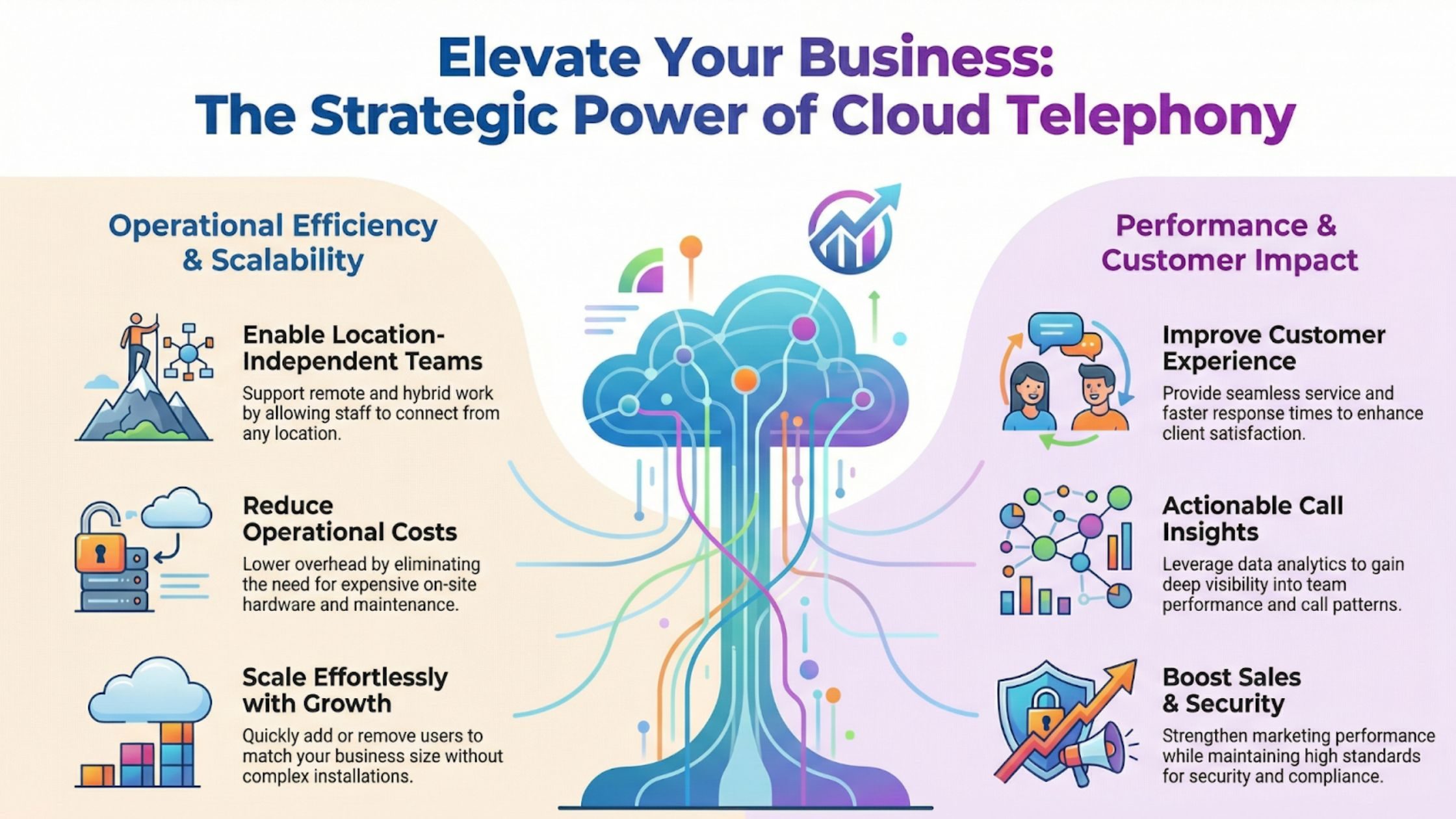
Now let’s look at the seven most powerful ways cloud telephony changes how businesses communicate, sell, and support customers.
1. Enables Location-Independent Teams
With cloud telephony, employees are no longer tied to office desks. Sales teams, support agents, and managers can handle calls from anywhere using mobile apps or softphones.
This is especially valuable in India, where businesses often operate across multiple states or adopt hybrid work models. Remote onboarding becomes easier, and business continuity is maintained even during disruptions.
2. Improves Customer Experience
Customers value quick responses and smooth interactions. Kommuno’s cloud telephony ensures:
- Faster call connections
- Fewer missed calls
- Personalized routing based on customer data
Features like IVR and intelligent call routing ensure customers don’t waste time explaining their issue repeatedly.
3. Reduces Operational Costs
Traditional phone systems require capital investment, maintenance, and upgrades. Cloud telephony shifts this to a predictable operational expense.
Businesses save on:
- Hardware installation
- Maintenance staff
- Long-distance calling
- System upgrades
This makes cloud telephony in India particularly attractive for startups and SMEs aiming to optimize costs without sacrificing quality.
4. Delivers Actionable Call Insights
Every call is a data point. Cloud telephony platforms convert call activity into meaningful insights, such as
- Peak call hours
- Customer wait times
- Agent performance trends
- Lead conversion patterns
These insights help management make smarter decisions, improve scripts, and optimize staffing.
5. Scales Effortlessly With Business Growth
Whether you add five agents or five hundred, cloud telephony scales instantly. New users, numbers, and features can be activated without physical changes.
This flexibility is critical for seasonal businesses, growing startups, and enterprises expanding into new regions.
6. Strengthens Sales and Marketing Performance
Kommuno’s cloud telephony integrates closely with sales and marketing workflows. Businesses can:
- Track which campaigns generate calls
- Record sales conversations for training
- Route high-value leads to senior agents
- Automate follow-ups using call outcomes
This alignment between communication and revenue teams leads to higher conversion rates and better ROI.
7. Enhances Security and Compliance
Modern cloud telephony systems offer strong security measures such as encrypted calls, access controls, and secure data storage.
For industries like finance, healthcare, and e-commerce, this ensures compliance while maintaining customer trust.
Who Should Use Cloud Telephony?
Cloud telephony is not limited to large enterprises. It benefits a wide range of industries, including
- Startups and tech companies
- E-commerce businesses
- Real estate firms
- Healthcare providers
- Edtech and training institutes
- Customer support centers
- Logistics and delivery services
Any business that relies on phone communication can gain value from a cloud-based approach.
Choosing the Right Cloud Telephony Solution in India
Selecting the right provider is critical to success. While evaluating options, businesses should consider:
- Platform reliability and uptime
- Local compliance and regulatory readiness
- Ease of integration with existing tools
- Quality of call analytics and reporting
- Scalability and pricing transparency
- Customer support and onboarding assistance
Working with the best cloud telephony providers in India ensures smoother implementation and long-term performance.
Final Thoughts
Cloud telephony is no longer a “nice-to-have” technology; it is a foundational communication tool for modern businesses. By moving calls to the cloud, organizations gain flexibility, cost efficiency, real-time insights, and a better way to engage customers.
As competition increases and customer expectations evolve, businesses that adopt kommuno’s cloud telephony early are better positioned to respond faster, sell smarter, and support customers more effectively.
Whether you are a growing startup or an established enterprise, investing in a reliable cloud telephony solution in India can redefine how your business communicates today and scales tomorrow.