
Benefits of using Cloud-based IVR system for Startup
In today’s fast-paced business environment, every customer expects quick, clear, and convenient communication. Phone calls continue to be one of the most trusted channels for customer support, sales inquiries, and service requests. But as businesses grow, handling large volumes of calls becomes challenging. That is where modern communication technologies like cloud telephony in India and advanced IVR systems play a crucial role. When used together, they create a simplified, efficient, and customer-friendly communication experience.
Cloud telephony and IVR platforms have evolved rapidly in the last decade. Whether it is a startup, a growing enterprise, or a large corporation, almost every business today relies on at least one of these technologies to handle customer interactions. The combination of these tools enables companies to offer round-the-clock availability, instant call routing, and a structured communication flow, all without investing in expensive hardware. As demand grows, businesses often look for the best IVR service provider in India to streamline their communication strategy.
In this blog, we will explore how cloud telephony and IVR systems work together at Kommuno, why they matter, and how businesses across different industries benefit from their integration.
1. Understanding Cloud Telephony: The Backbone of Modern Voice Communication
Cloud telephony refers to hosting communication systems like phone calls, call routing, recordings, and analytics on the cloud instead of traditional on-premise setups. In simple words, it eliminates the need for physical phone lines or bulky PBX boxes. Calls are made and received through the internet, offering greater flexibility and scalability.
Key Benefits of Using Cloud Telephony in India Include:
a. No Hardware Costs
Businesses don’t need to install cables or purchase expensive infrastructure. Everything is managed online, which drastically reduces operational costs.
b. Remote and Multi-Location Support
Teams can operate from anywhere: office, home, or even across cities. This flexibility has made cloud telephony popular across startups, online businesses, and service companies.
c. Scalability for Growing Organizations
A business can handle ten calls or ten thousand calls with the same system. You can add agents, numbers, and extensions instantly.
d. Real-Time Tracking and Analytics
Every call can be monitored, recorded, and analyzed. This allows managers to improve performance, measure customer satisfaction, and maintain quality control.
Cloud telephony forms the foundation. On top of this foundation comes the IVR system in India, which shapes the caller’s experience.
2. Understanding the IVR System: Automating the Customer Journey
An IVR system is a call management technology that interacts with callers through prerecorded messages. When you call a company and hear, “Press 1 for Sales, press 2 for Support,” that is an IVR at work.
The purpose of an IVR is to guide callers to the right department without human involvement. It saves both time and cost while making communication more organized.
Key Advantages of Using an IVR System in India Include:
a. Instant Response for All Callers
Customers don’t have to wait for an agent to pick up immediately. The IVR greets them as soon as the call connects.
b. Efficient Call Routing
Instead of transferring calls manually, the system instantly sends the customer to the correct team. This reduces frustration and improves efficiency.
c. 24/7 Customer Support
Even during off-hours, the IVR can continue to offer basic information or collect customer details.
d. Reduced Workload for Agents
Agents only receive calls that require human handling. Simple questions or routing tasks are managed by the system.
e. Enhanced Professional Image
A company with an IVR system appears more structured, reliable, and customer-focused.
Combined with cloud telephony, these benefits become even more powerful.
3. How Cloud Telephony and IVR Systems Work Together
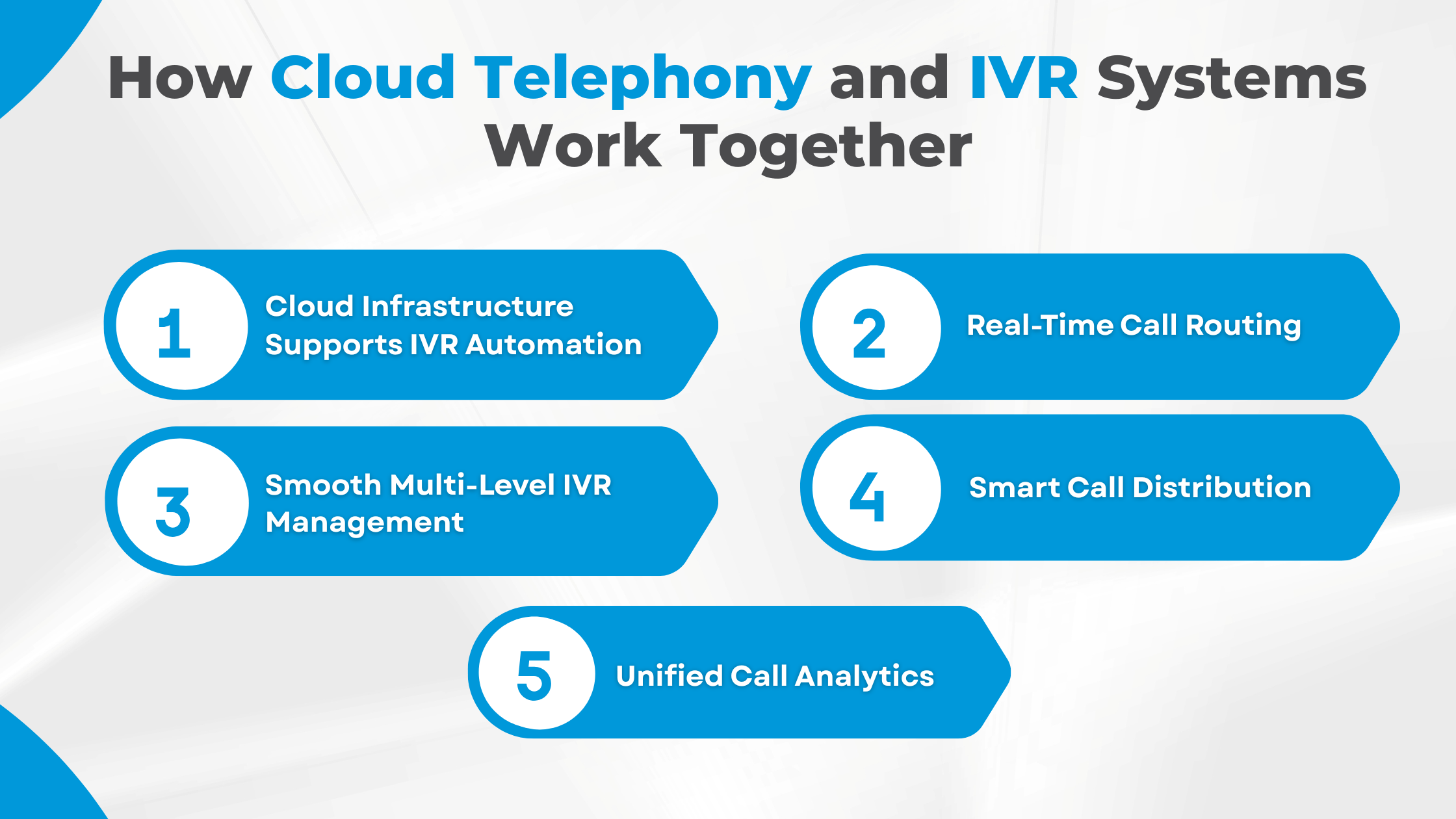
When integrated, Kommuno’s cloud telephony and IVR platforms create a seamless communication ecosystem. Here’s how they complement each other:
a. Cloud Infrastructure Supports IVR Automation
A cloud telephony system hosts the IVR in the cloud. This means the IVR system doesn’t need separate hardware, servers, or maintenance. Audio recordings, routing logic, and menu flows all run on the cloud.
b. Real-Time Call Routing
Cloud telephony receives the call, while the IVR guides the caller. Once the caller presses an option, the cloud telephony engine routes the call to the right destination: an agent, department, voicemail, or even another IVR.
c. Smooth Multi-Level IVR Management
Businesses with several departments use multi-level IVRs. For example:
- Press 1 for Sales
- Press 2 for Support
- Press 3 for Billing
- Press 4 for Technical Assistance
Cloud telephony ensures each layer functions smoothly without delays or call drops.
d. Smart Call Distribution
Cloud telephony enables advanced routing, like:
- Round-robin distribution
- Skill-based routing
- Time-based routing
- Priority-based routing
This ensures callers reach the best available agent based on the IVR input.
e. Unified Call Analytics
Cloud telephony platforms provide detailed reports such as
- Number of incoming calls
- Missed calls
- Average wait time
- Peak call hours
- Agent productivity
These insights help businesses refine their IVR menus for better customer experience.
4. Why Businesses Need the Combined Power of Cloud Telephony and IVR
a. Faster Query Resolution
With automated greetings, structured menus, and smart routing, customers reach the right person quickly. Faster service directly leads to higher customer satisfaction.
b. Consistent Communication Experience
Even during holidays, weekends, or agent shortages, the IVR system provides consistent support. Cloud telephony ensures uptime and stability.
c. Highly Cost-Effective
Both technologies reduce manpower dependency. A business needs fewer agents and no hardware maintenance. Many companies choose the best IVR service provider in India to minimize costs.
d. Handles High Call Volumes
During peak hours or promotional periods, cloud telephony can handle thousands of calls at once. IVR ensures each caller gets an immediate acknowledgement.
e. Perfect for Multi-Office or Remote Teams
Cloud telephony routes calls to any location, office extension, mobile phone, or remote workspace. IVR directs the query accurately based on the caller’s selection.
The IVR system helps filter calls, routing them to either the tracking desk or customer support. Cloud telephony ensures agents from anywhere can answer efficiently.
5. Features to Look for in the Best IVR Service Provider in India
If a business is planning to adopt this communication model, choosing the right provider is crucial. The ideal service provider should offer:
a. Easy-to-Use Dashboard
Businesses should be able to edit IVR menus, upload recordings, and view reports without technical barriers.
b. Multi-Level IVR Support
For organizations with multiple teams, the provider must offer advanced routing and layered menu options.
c. Strong Cloud Telephony Integration
The IVR must work smoothly with call routing, recording, and analytics features.
d. 99.9% Uptime
Reliable communication is essential for customer trust.
e. Scalability
As call volume grows, the provider should be able to support additional lines, agents, and regions.
f. Reporting and Tracking Tools
Detailed analytics help businesses identify areas for improvement.
g. Dedicated Customer Support
Since communication is the backbone of business operations, support availability is crucial.
6. How This Integration Boosts Productivity Across Teams
When Kommuno’s cloud telephony and IVRs are used together, the workflow becomes much smoother.
a. Sales Teams Benefit from Faster Lead Handling
Leads are directed instantly to the correct representative. Missed calls can also be converted into potential leads through automatic callback features.
b. Support Teams Become More Organised
Agents only receive calls relevant to their expertise, improving quality and problem-solving efficiency.
c. Managers Gain Clear Visibility
Through real-time dashboards, managers can track performance, caller behaviour, and team productivity.
d. Marketing Teams Leverage Call Insights
Campaign tracking becomes easier as businesses can assign virtual numbers to different campaigns.
7. Future Trends: What’s Coming Next for Cloud Telephony and IVR
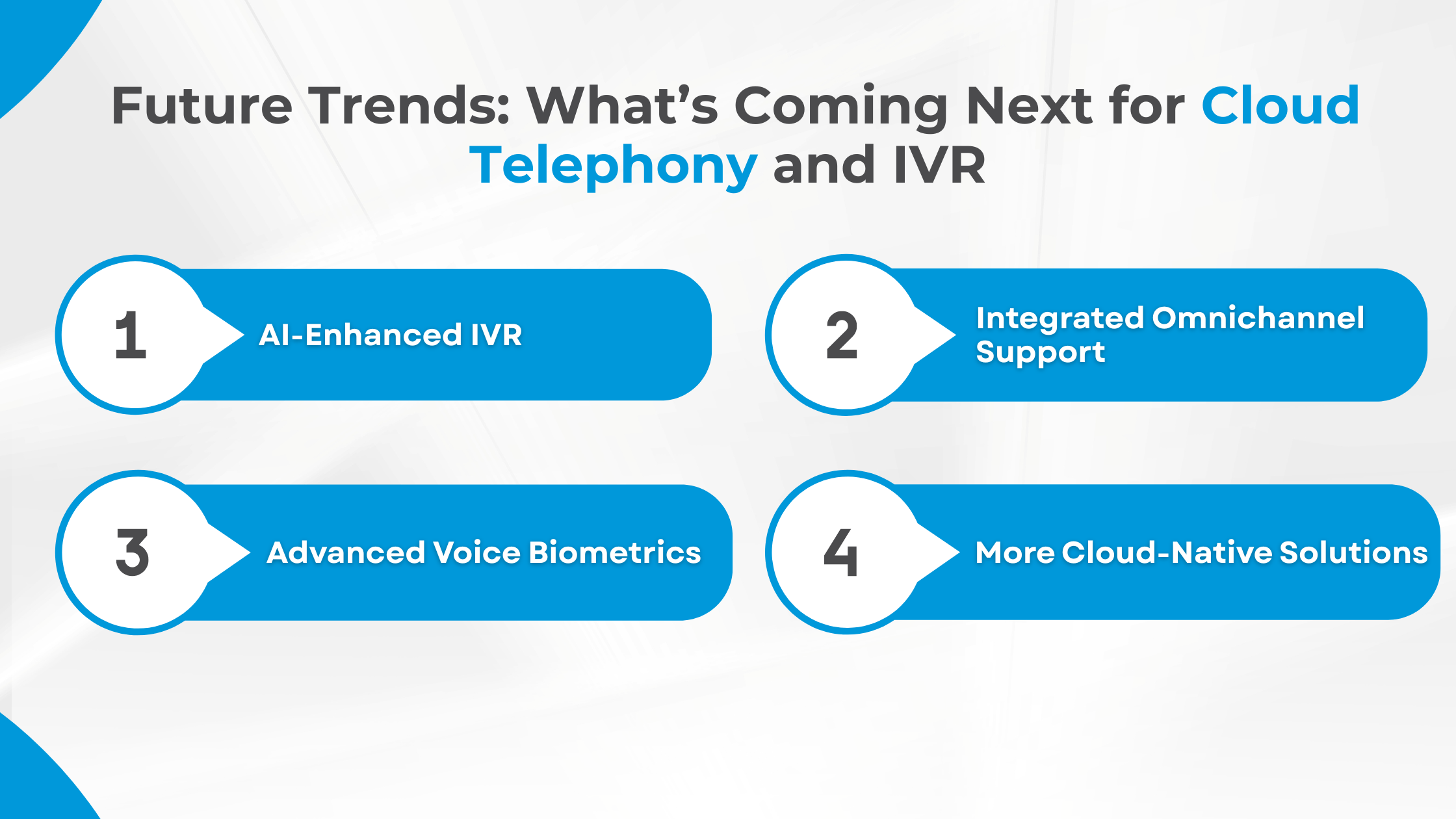
As businesses evolve, these technologies will become even more intelligent and automated.
a. AI-Enhanced IVR
Future IVRs will recognize speech patterns, understand customer intent, and offer personalized responses.
b. Integrated Omnichannel Support
Calls, WhatsApp messages, emails, and chats will be handled from a single unified dashboard.
c. Advanced Voice Biometrics
This will enhance security, especially in banking and financial services.
d. More Cloud-Native Solutions
With growing digital adoption, cloud telephony in India will become the primary communication infrastructure for most businesses.
Conclusion
The integration of cloud telephony and IVR systems represents a significant shift in the way businesses manage customer communication. By combining automation with flexibility at Kommuno, these technologies help companies operate smarter, faster, and more professionally. Whether you are a growing startup, a mid-sized enterprise, or a large organization, adopting the right communication tools can elevate your customer experience and build long-term trust.
As more companies continue to digitalize, the demand for reliable cloud telephony in India and advanced IVR systems will only increase. Choosing the best IVR service provider in India ensures you have access to seamless connectivity, intelligent automation, and powerful analytics that drive business growth.
If your business aims to reduce response time, improve customer satisfaction, and create a structured communication flow, the combination of cloud telephony and IVR is the smartest solution available today.