
Why RCS is the Future of Business Messaging in India
In today’s digital world, customers expect fast, clear, and engaging communication from businesses. Traditional SMS is no longer enough to capture attention or deliver meaningful interactions. This is where RCS messaging is changing the way businesses connect with customers.
Powered by Rich Communication Services, RCS messaging upgrades normal text messages into interactive, visual, and branded conversations, right inside the default messaging app on smartphones. With increasing smartphone usage, RCS messaging in India is quickly becoming the future of business communication.
This blog explains what RCS messaging is, how it works, and why Indian businesses should start using Kommuno’s RCS messaging.
What Is RCS Messaging?
RCS messaging stands for Rich Communication Services messaging. It is the advanced version of SMS that allows businesses to send rich, interactive messages instead of plain text.
Unlike traditional SMS, RCS messaging supports:
- Images and videos
- Buttons for quick actions
- Branded message layouts
- Verified business sender details
All these features work inside the customer’s default messaging app, without requiring any additional downloads.
What Are Rich Communication Services?
Rich Communication Services is the technology behind RCS messaging. It brings modern messaging features similar to chat apps, but without forcing users to install new platforms.
Rich Communication Services help businesses:
- Improve message clarity
- Increase customer engagement
- Build trust with branded messaging
This makes Kommuno’s RCS messaging ideal for businesses that want better results from their messaging campaigns.
Why RCS Messaging Is Important for Businesses in India
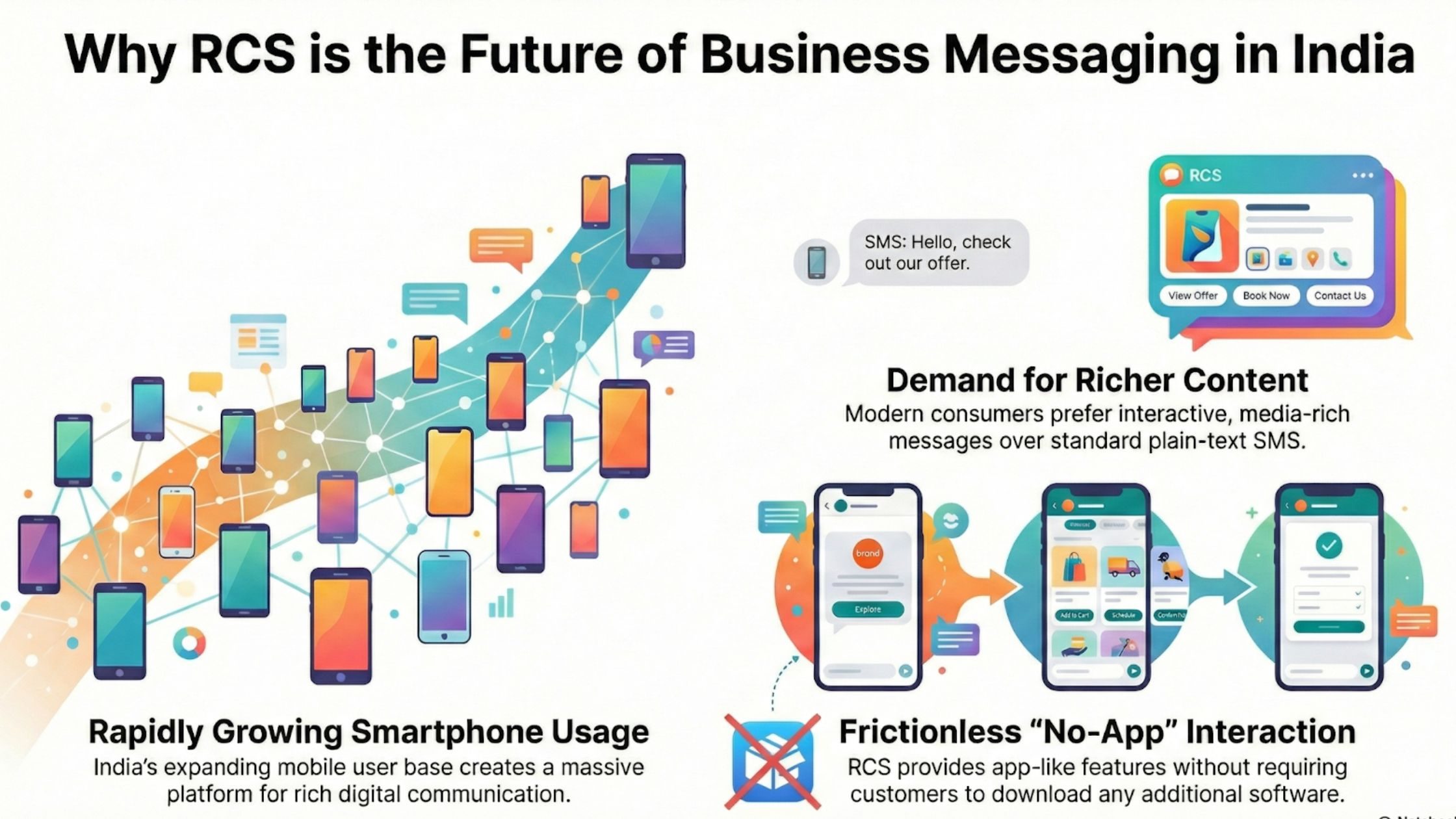
Growing Smartphone Usage
India has one of the largest smartphone user bases in the world. Most Android smartphones already support RCS messaging, making adoption easier for both businesses and customers.
As more people rely on smartphones for communication, RCS messaging in India becomes a natural upgrade from SMS.
Customers Want Richer Messages
Indian customers prefer visual and interactive content over long text messages. RCS messaging allows businesses to send:
- Product images
- Offer banners
- Action buttons
This makes messages more engaging and easier to understand.
No Need for Extra Apps
One of the biggest advantages of RCS messaging is convenience. Customers receive RCS messages directly in their messaging inbox.
There is:
- No app download
- No login required
- No learning curve
This increases open rates and customer response.
How RCS Messaging Is Better Than SMS
Traditional SMS is limited to text only. This makes it hard for businesses to explain offers, products, or updates clearly.
With RCS messaging, businesses can:
- Share visuals instead of long text
- Add buttons for instant actions
- Use branded layouts
This improves communication quality and customer experience.
Key Benefits of RCS Messaging for Businesses

1. Better Customer Engagement
RCS messaging allows customers to interact with messages instead of just reading them. Buttons, images, and clear layouts encourage action and improve response rates.
2. Stronger Brand Identity
With RCS messaging, businesses can display:
- Brand name
- Logo
- Verified sender identity
This builds trust and reduces the chances of messages being ignored.
3. Clear Call-to-Action
Instead of asking customers to reply with text, RCS messages include clickable buttons like
- “View Details”
- “Confirm Order”
- “Contact Support”
This makes it easier for customers to take the next step.
4. Improved Customer Experience
Rich Communication Services make messaging more human and less confusing. Customers receive well-structured messages that are easy to read and act upon.
5. Higher Message Read Rates
Because RCS messages look modern and professional, customers are more likely to open and read them compared to standard SMS.
Common Business Use Cases for RCS Messaging
Order Updates and Notifications
Businesses can send:
- Order confirmations with images
- Shipping updates
- Delivery notifications
This keeps customers informed and reduces support queries.
Promotions and Marketing Campaigns
RCS messaging is ideal for promotions. Businesses can send:
- Discount banners
- Product highlights
- Offer buttons
These campaigns perform better than plain text promotions.
Appointment and Reminder Messages
RCS messages can include:
- Appointment details
- Date and time
- Simple confirmation buttons
This helps reduce missed appointments.
Customer Support Communication
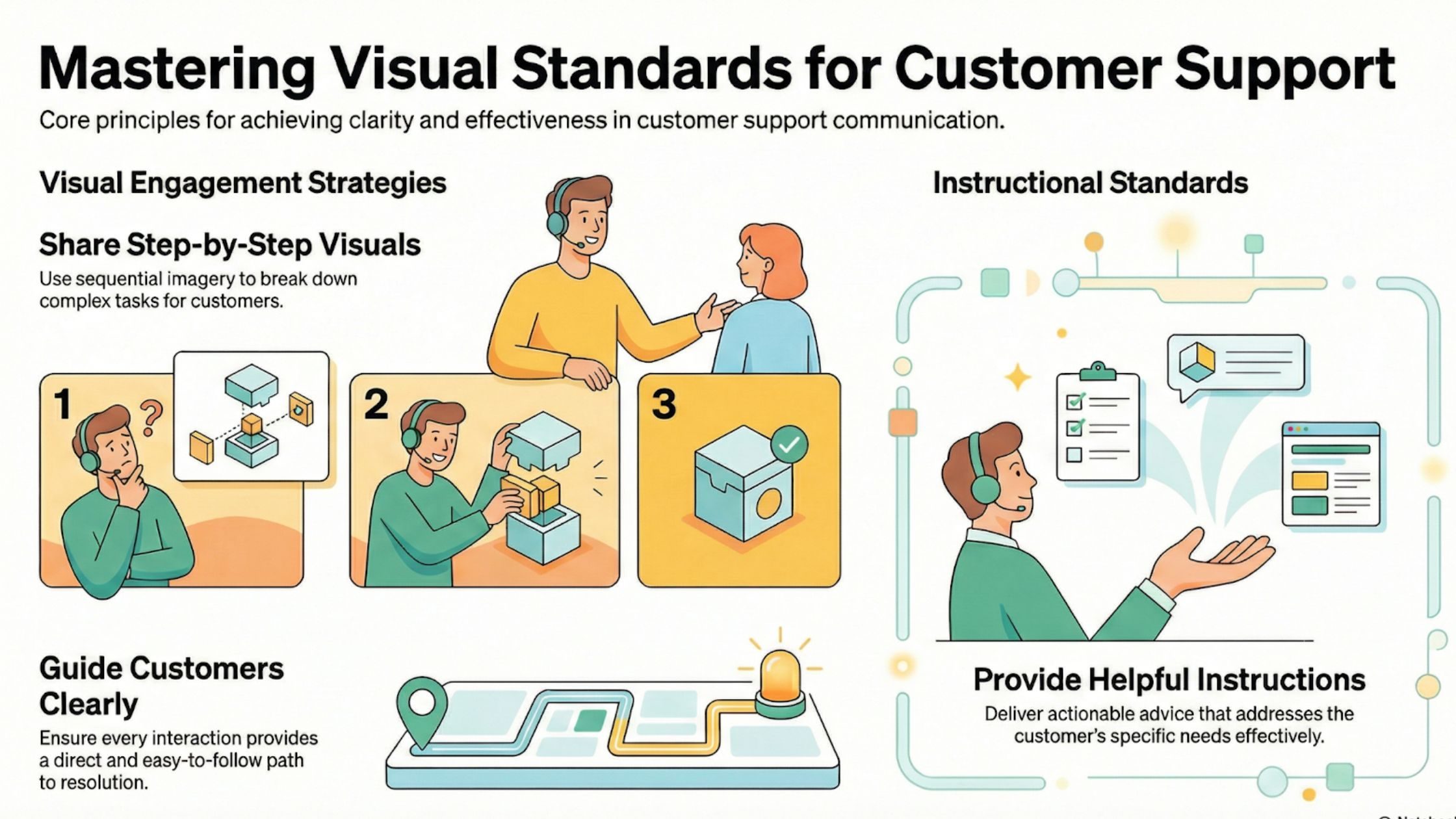
Businesses can use RCS messaging to:
- Share step-by-step visuals
- Provide helpful instructions
- Guide customers clearly
This improves customer satisfaction and reduces confusion.
RCS Messaging in India: Market Potential
RCS messaging in India is still growing, but adoption is increasing steadily. As customers become familiar with richer messages, expectations will rise.
Indian businesses that adopt RCS messaging early can:
- Stand out from competitors
- Improve engagement rates
- Strengthen customer relationships
RCS Messaging vs WhatsApp for Business
WhatsApp is widely used, but it requires customers to save numbers or opt in. RCS messaging works directly in the messaging inbox without extra steps.
RCS messaging is ideal for:
- Transactional messages
- Promotional communication
- Branded notifications
Many businesses use both channels together for better reach.
Why RCS Messaging Is the Future of Business Communication
Kommuno’s RCS messaging combines:
- The reach of SMS
- The richness of chat apps
- The trust of branded communication
As businesses focus more on customer experience, RCS messaging becomes a natural choice.
Challenges of RCS Messaging
While RCS messaging offers many benefits, it also has limitations:
- Requires an internet connection
- Not supported on all devices yet
- Still gaining awareness
For this reason, many businesses use Kommuno’s RCS messaging along with SMS.
Best Practices for Using RCS Messaging
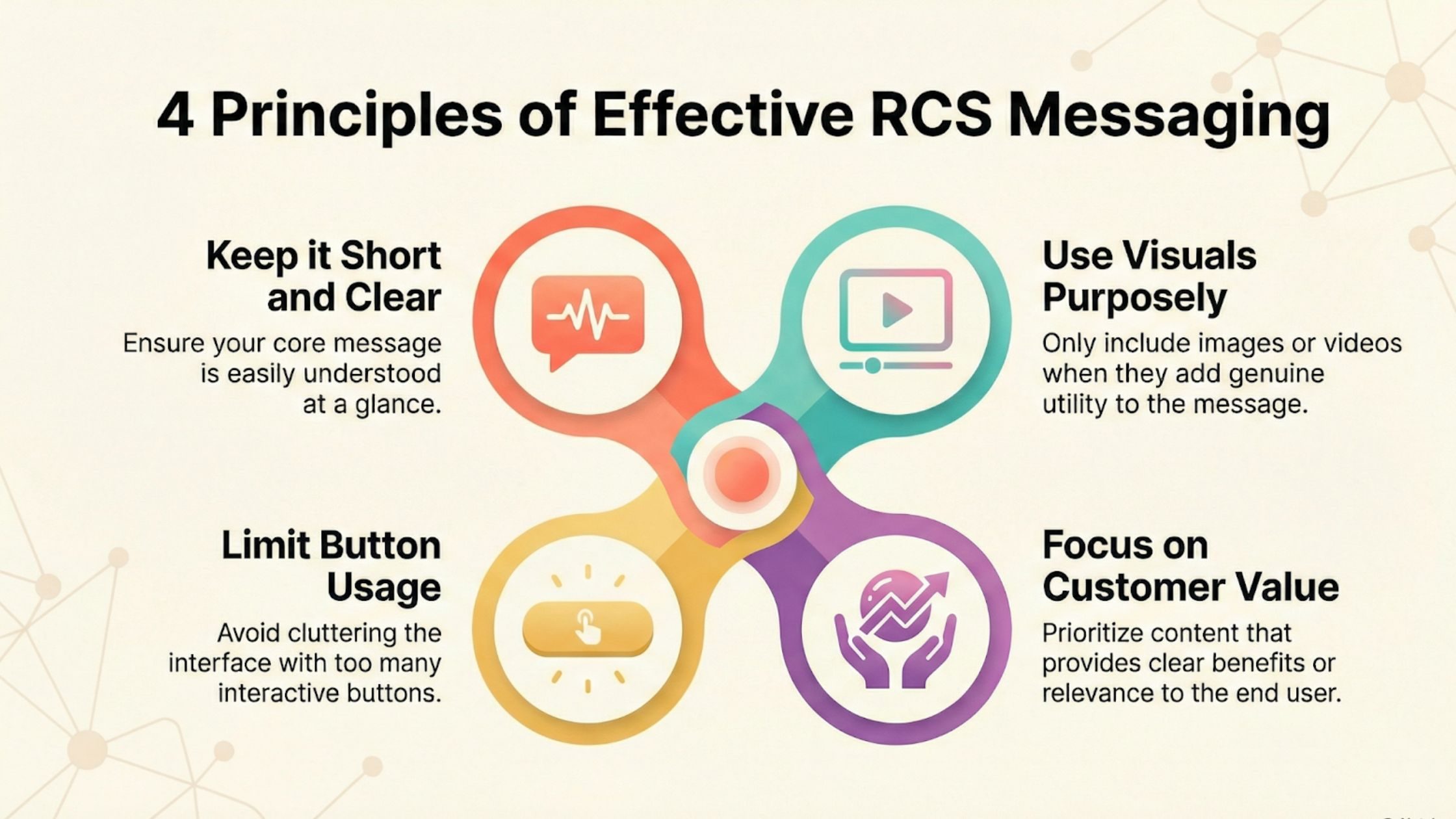
To get the best results from Rich Communication Services:
- Keep messages short and clear
- Use visuals only when useful
- Avoid too many buttons
- Focus on customer value
Simple messages work best.
How RCS Messaging Supports Digital Growth in India
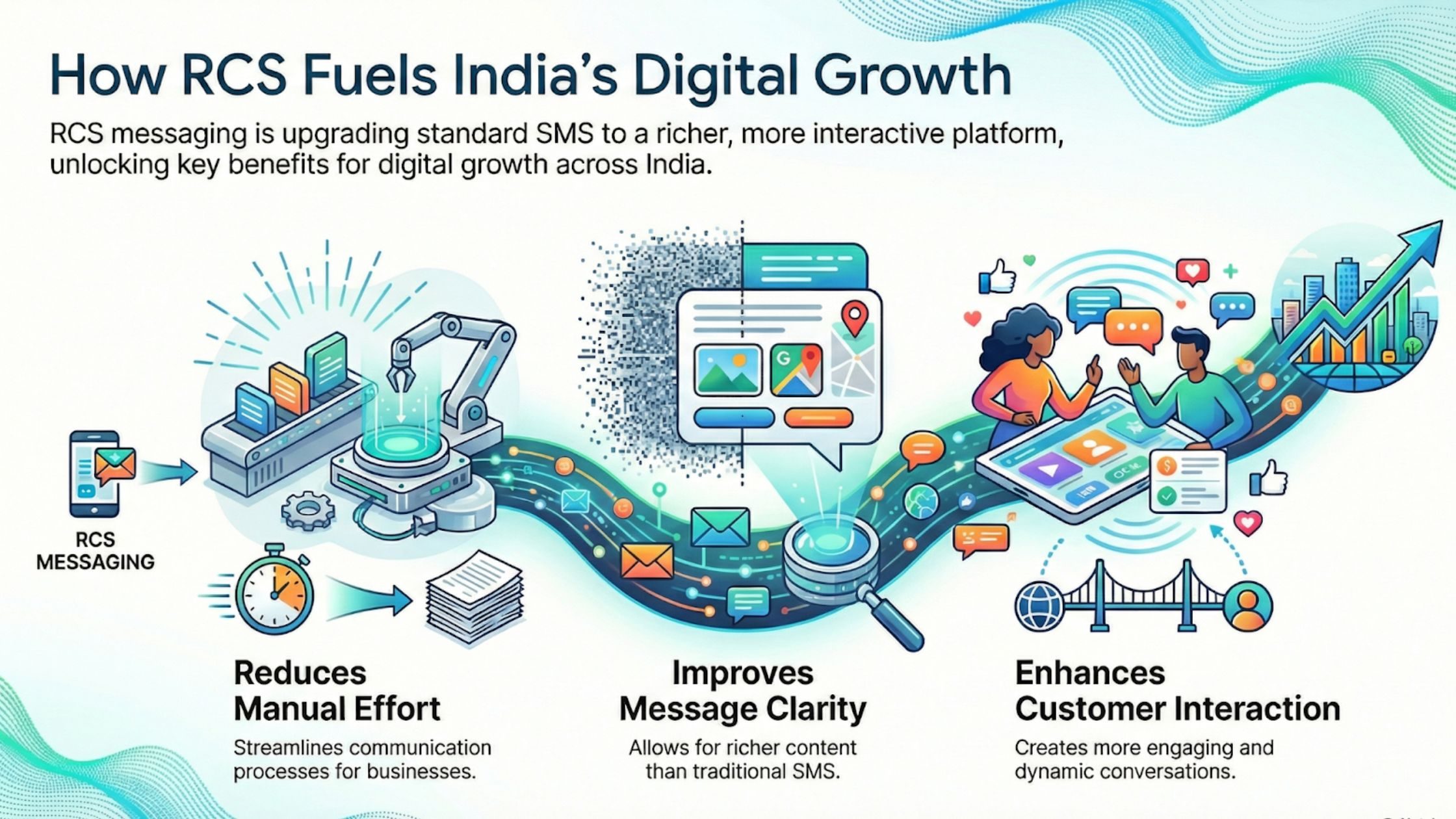
Kommuno’s RCS messaging supports India’s move toward digital communication by:
- Reducing manual effort
- Improving message clarity
- Enhancing customer interaction
It fits well into modern business communication strategies.
Future of Rich Communication Services
The future of Rich Communication Services looks strong. As more devices and networks support RCS, it is expected to become a standard business messaging channel.
Businesses that adopt RCS messaging today will be well prepared for tomorrow.
Why Businesses Should Start Using RCS Messaging Now
Early adoption helps businesses:
- Build stronger customer trust
- Improve engagement metrics
- Stay ahead of the competition
To explore RCS in more detail, you can also read our related blogs on how RCS messaging improves customer engagement with rich media, the growing opportunities for businesses using RCS in India, and a detailed comparison of RCS with SMS and WhatsApp.
Conclusion
RCS messaging, powered by Rich Communication Services, is transforming how businesses communicate with customers. It delivers rich, interactive, and branded messages directly through the default messaging app.
For RCS messaging in India, the opportunity is massive. With rising smartphone usage and growing demand for better customer engagement, RCS messaging is clearly the future of business messaging.
Businesses that invest in Kommuno’s RCS messaging today will enjoy better communication, stronger customer relationships, and higher engagement in the years ahead.