
The Ultimate Guide to Choosing an IVR Solution for Indian Businesses
Customer communication is no longer just about answering phone calls. In a fast-growing and highly competitive market like India, businesses are expected to respond quickly, route calls intelligently, and deliver consistent experiences, regardless of call volume. This is where IVR solutions play a critical role.
An Interactive Voice Response (IVR) system helps businesses manage inbound calls efficiently while improving customer satisfaction and reducing operational load. Whether you run a startup, a mid-sized company, or a large enterprise, choosing the right IVR system in India can directly impact customer trust, agent productivity, and overall business growth.
This blog breaks down everything Indian businesses need to know, from how Kommuno’s IVR works and why it matters to selecting the best IVR service provider in India based on real operational needs.
What Is an IVR System?
An IVR system is an automated telephony technology that interacts with callers using pre-recorded voice prompts and keypad inputs. It allows customers to navigate through menu options, such as “Press 1 for Sales” or “Press 2 for Support,” without speaking to a live agent initially.
A modern IVR system does much more than basic call routing. It can:
- Identify callers
- Collect information
- Route calls intelligently
- Integrate with CRMs and support tools
- Provide real-time call insights
For Indian businesses handling high call volumes across multiple regions, IVR acts as the first point of contact and sets the tone for the customer experience.
Why IVR Solutions Are Essential for Indian Businesses
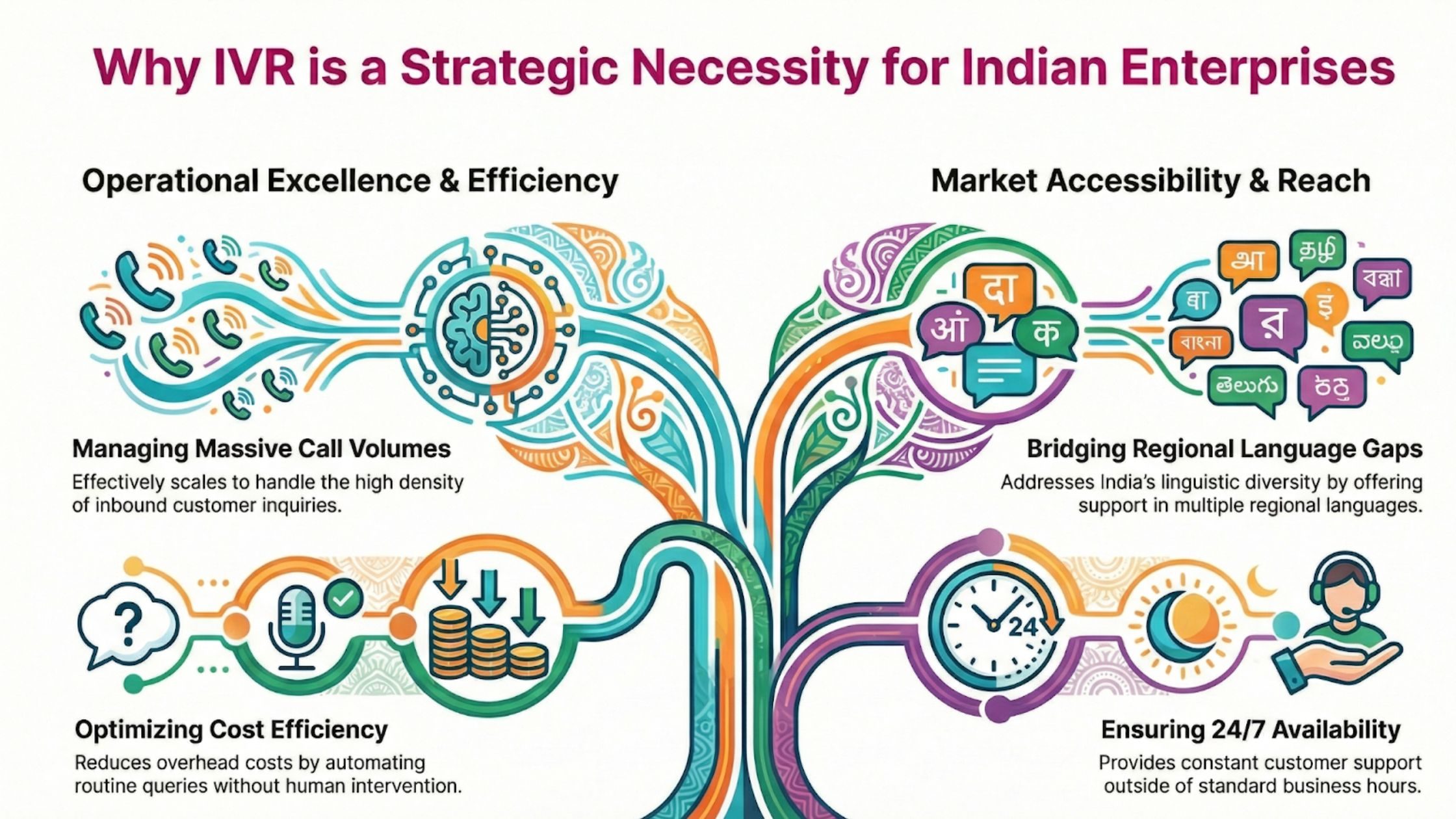
India’s business environment is unique. High population density, multilingual customers, and rapidly expanding digital adoption make call management complex.
Here’s why Kommuno’s IVR solutions are especially important in India:
High Call Volumes
Businesses often receive hundreds or thousands of daily calls. IVR prevents congestion and long wait times by distributing calls efficiently.
Cost Efficiency
By handling repetitive queries automatically, IVR reduces dependency on large support teams.
Regional and Language Diversity
IVR systems can support multiple languages, helping businesses serve customers across different states more effectively.
24/7 Availability
Even outside working hours, IVR ensures callers are guided, informed, or allowed to leave messages.
How an IVR System Works
Although it feels simple to the caller, the backend of an IVR system is highly structured.
Here’s how a typical IVR system in India works:
- A customer calls your business number.
- The IVR system answers the call instantly.
- Pre-recorded voice prompts guide the caller.
- The caller responds using keypad inputs.
- Based on input, the call is routed to:
- A specific department
- An available agent
- A voicemail
- A recorded message
- A specific department
- Call details are logged for tracking and analysis.
Advanced IVR systems can also use customer data to personalize the experience.
Types of IVR Solutions Available in India
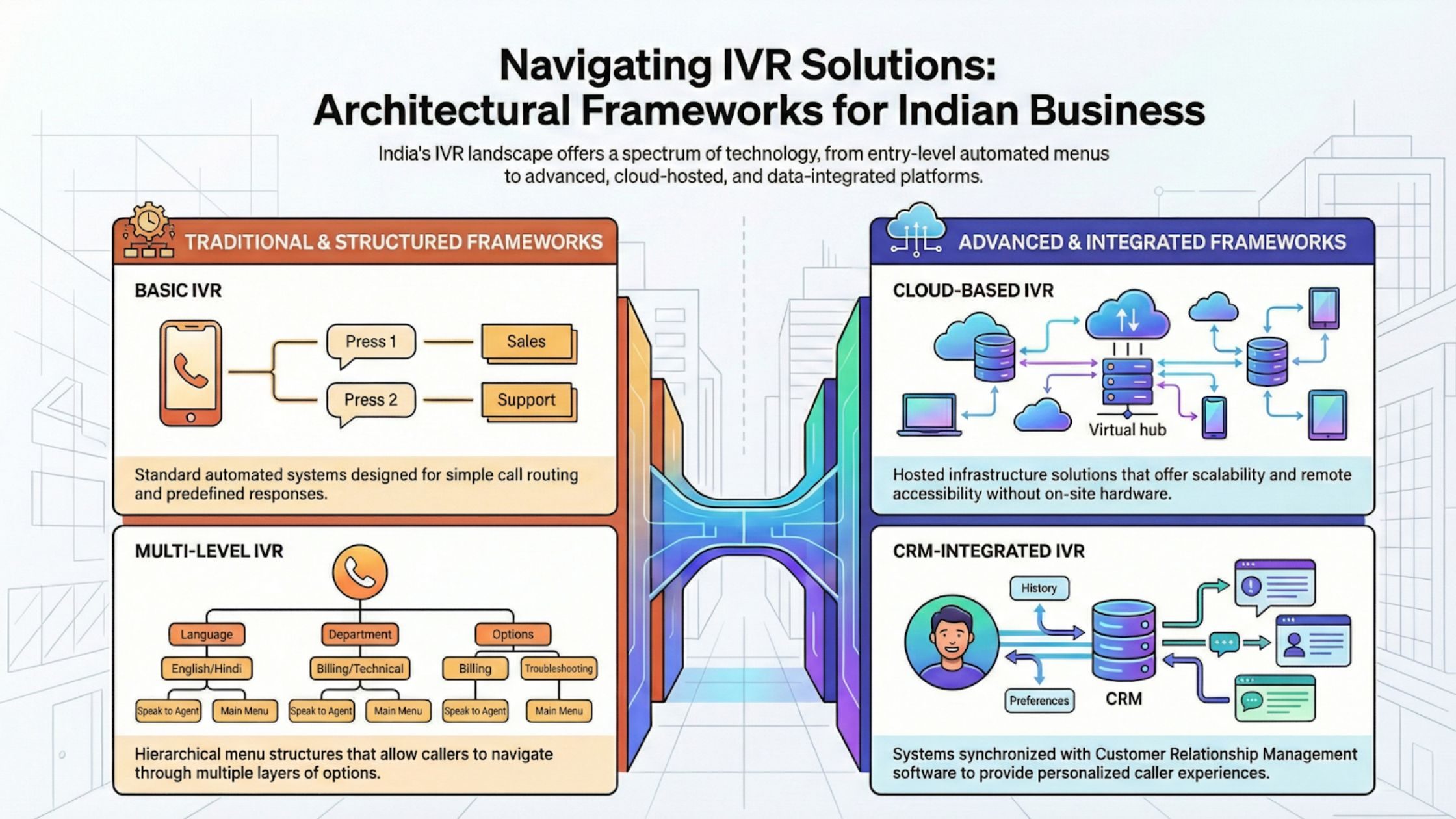
Not all IVR systems are the same. Choosing the right type depends on your business size and goals.
Basic IVR
Simple menu-based routing is suitable for small businesses with limited call flows.
Multi-Level IVR
Allows deeper menu structures for organizations with multiple departments or services.
Cloud-Based IVR
Hosted on the cloud and accessible from anywhere. Ideal for scalability and remote teams.
CRM-Integrated IVR
Connects with customer databases to identify callers and route calls intelligently.
For most modern businesses, cloud-based IVR offers the best balance of flexibility and cost.
Key Features to Look for in an IVR System
Choosing the right IVR system requires more than checking basic functionality. Below are the features that truly matter.
Customizable Call Flow
A good IVR system should allow complete control over how calls are handled. Businesses must be able to design call menus, greetings, and routing logic based on their specific departments and processes. Easy customization ensures the IVR evolves as business needs change, without requiring technical expertise.
Multi-Language Support
For Indian businesses, language flexibility is essential. An IVR system that supports multiple regional languages helps callers feel comfortable and understood, reducing confusion and call abandonment while improving overall engagement.
Smart Call Routing
Efficient call routing ensures callers reach the right department or agent quickly. Smart routing can be based on caller input, business hours, agent availability, or priority rules, helping reduce wait times and improve first-call resolution.
Call Recording and Logs
Call recording is important for quality monitoring, training, and compliance. Access to detailed call logs also helps teams review call history, track missed calls, and address customer concerns more effectively.
Real-Time Analytics and Reporting
An effective IVR system should provide clear insights into call performance. Metrics such as call volume, peak hours, and drop-off points help businesses optimize staffing and improve customer experience.
Scalability and Integrations
As businesses grow, the IVR should scale without disruption. Integration with CRM and support tools ensures smoother workflows, better data visibility, and more personalized customer interactions.
Benefits of Using IVR Solutions
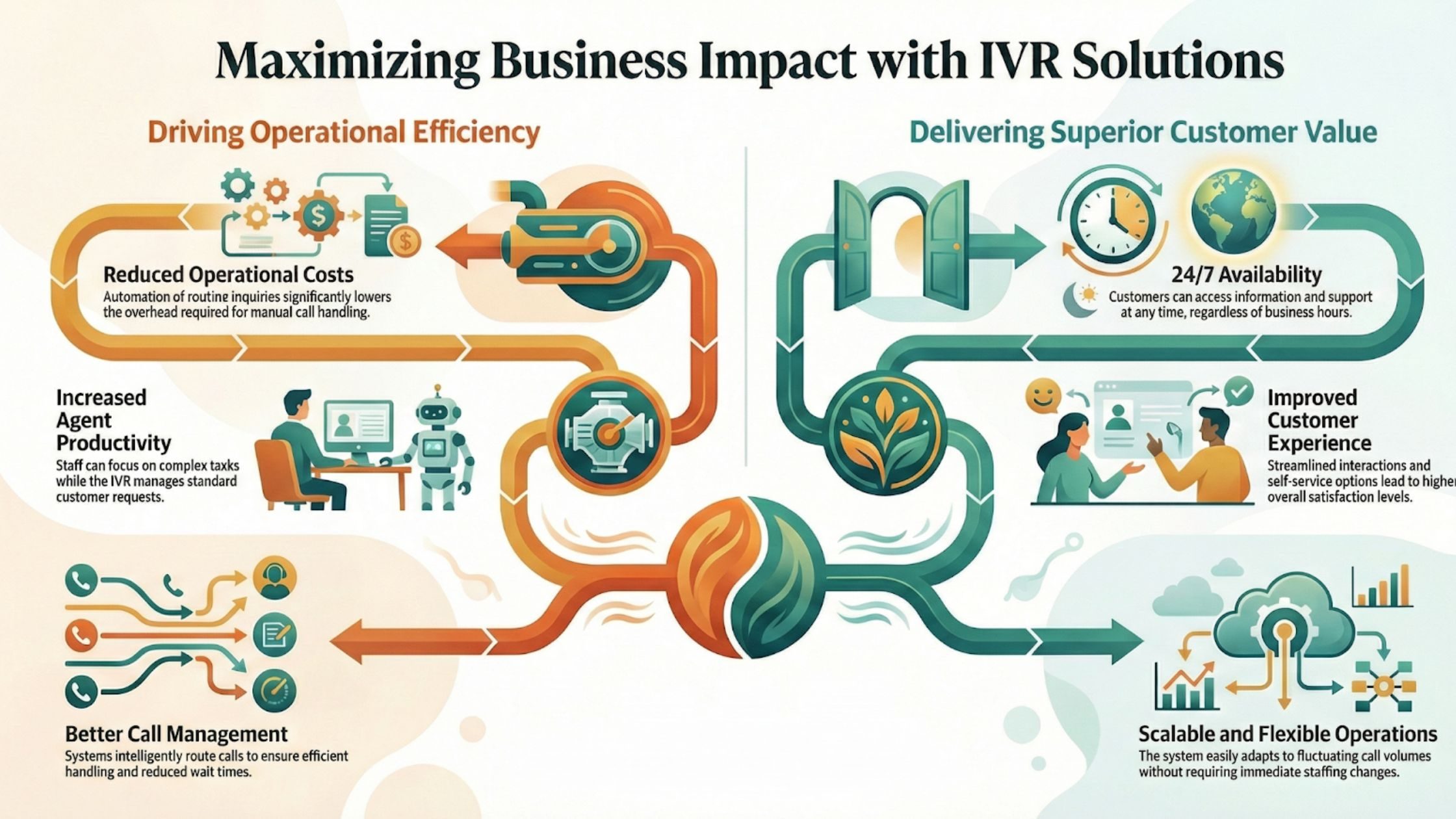
Implementing the right IVR system brings measurable business benefits.
Improved Customer Experience
An IVR system helps customers reach the right department quickly without long waiting times. Clear menus and smart routing reduce frustration and ensure callers receive timely assistance, creating a smoother and more professional experience.
Reduced Operational Costs
By automating repetitive and common inquiries, IVR systems reduce the need for large call-handling teams. This allows businesses to manage high call volumes efficiently while lowering staffing and infrastructure costs.
Increased Agent Productivity
IVR filters and routes calls effectively, so agents spend less time handling basic queries and more time focusing on complex or high-value interactions. This improves efficiency and job satisfaction across teams.
Better Call Management
With features like call queues, call logs, and call recordings, businesses gain better control over incoming calls. Managers can monitor performance, identify gaps, and ensure calls are handled consistently.
24/7 Availability
An IVR system ensures that customer calls are answered even outside business hours. Callers can receive information, leave messages, or be guided appropriately, helping businesses remain accessible at all times.
Scalable and Flexible Operations
As businesses grow, IVR systems scale easily without major changes. New departments, agents, or locations can be added seamlessly, making IVR a future-ready communication solution.
Common IVR Mistakes Indian Businesses Should Avoid
While IVR is powerful, poor implementation can harm customer experience.
Avoid these common mistakes:
- Overly long menus
- Confusing language or unclear prompts
- Too many menu levels
- Lack of a human agent option
- No regular updates or optimization
A well-designed IVR should simplify, not complicate, communication.
How to Choose the Best IVR Service Provider in India
Selecting the best IVR service provider in India requires careful evaluation. Focus on long-term value, not just price.
Reliability and Uptime
Downtime equals missed calls and lost revenue. Reliability is non-negotiable.
Ease of Use
Non-technical teams should be able to update IVR flows easily.
Integration Capabilities
Ensure the IVR works smoothly with your CRM, helpdesk, or sales tools.
Transparent Pricing
Avoid providers with hidden charges or unclear billing models.
Local Support
India-based support teams understand regional challenges better and respond faster.
IVR System Use Cases Across Industries
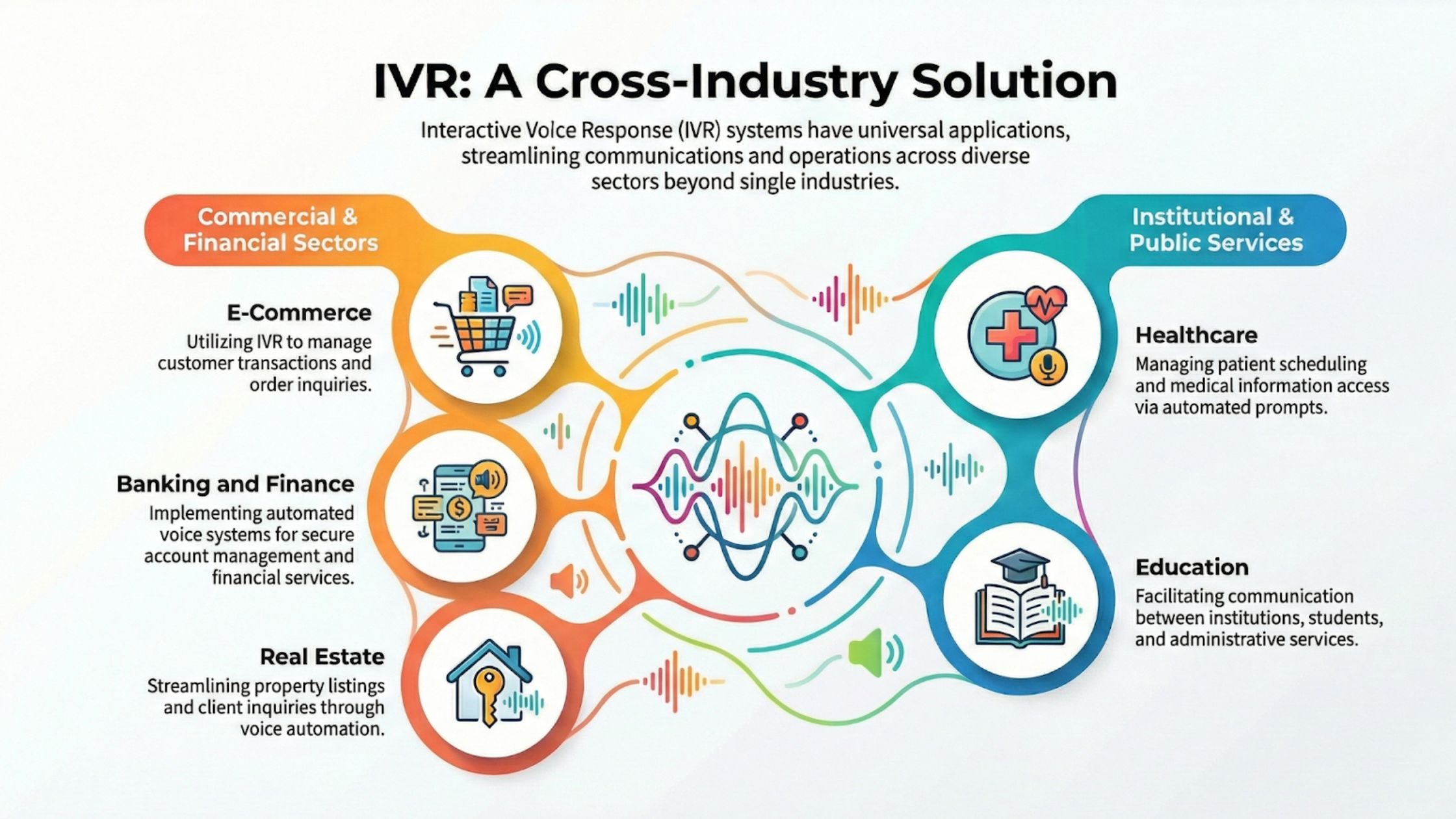
Kommuno’s IVR solutions are versatile and applicable across multiple sectors.
E-Commerce
Order status, returns, and delivery updates.
Healthcare
Appointment booking and reminders.
Banking and Finance
Account information and customer verification.
Education
Admission inquiries and fee information.
Real Estate
Lead qualification and property inquiries.
IVR vs Human Call Handling: Finding the Right Balance
IVR is not meant to replace human agents completely. The goal is balance.
Use IVR to:
- Filter and route calls
- Handle routine queries
- Reduce wait times
Use human agents for:
- Complex issues
- Emotional or high-value interactions
- Relationship building
A smart IVR strategy enhances human performance rather than replacing it.
Future of IVR Systems in India
Kommuno’s IVR technology continues to evolve. Future-ready systems are becoming
- More personalized
- Data-driven
- Integrated with business workflows
As customer expectations rise, IVR will play an even bigger role in shaping brand perception.
Final Thoughts
Choosing the right IVR solution is a strategic decision for Indian businesses. A well-implemented IVR system in India improves customer satisfaction, reduces costs, and creates a scalable communication framework.
Instead of viewing IVR as a technical tool, businesses should see it as a customer experience asset. When aligned with business goals, the right IVR system becomes a silent but powerful driver of growth.
If you’re evaluating IVR solutions, invest time in understanding your call flow needs, future growth plans, and customer expectations. Partnering with the best IVR service provider in India, such as Kommuno, ensures your communication remains efficient, professional, and ready for scale.