
How Do You Find the Right IVR & Cloud Telephony Solution for Your Business in India?
Business communication in India has undergone a major transformation in recent years. With increasing customer expectations and growing competition, companies are under pressure to respond faster, manage higher call volumes, and deliver consistent service across channels. Traditional phone systems are no longer enough to handle these demands.
This is where modern IVR system setups and cloud telephony solutions come into play. Businesses are now adopting internet-based communication platforms that offer flexibility, automation, and scalability without the need for heavy infrastructure.
The rise of cloud telephony in India has made it easier for startups, SMEs, and enterprises to streamline their communication processes. At the same time, a well-designed Kommuno’s IVR system helps ensure that every customer call is routed efficiently and handled professionally.
However, with multiple platforms available in the market, choosing the right solution can be challenging. This guide will help you understand the differences, evaluate key features, and identify which platform best fits your business needs.
Understanding IVR Systems
An IVR system, or Interactive Voice Response system, is an automated telephony feature that interacts with callers through pre-recorded voice prompts and keypad inputs. It acts as the first point of contact when a customer calls your business.
A typical IVR system allows customers to
- Select options such as sales, support, or billing
- Navigate through different departments
- Access basic information without speaking to an agent
A well-implemented IVR system in India ensures that calls are handled efficiently, reducing wait times and minimizing the chances of missed inquiries.
Modern IVR systems go beyond simple call routing. They can be customized to support multiple languages, prioritize high-value customers, and integrate with CRM systems for better personalization.
Understanding Cloud Telephony Solutions
Cloud telephony refers to a communication system that operates over the internet instead of traditional phone lines. It allows businesses to manage calls, messages, and workflows through a centralized, cloud-based platform.
With cloud telephony in India, companies can:
- Set up virtual phone numbers
- Route calls to remote teams
- Record and monitor calls
- Access real-time analytics
- Integrate with business tools
Unlike traditional systems, cloud telephony does not require expensive hardware or maintenance. Everything is hosted on secure servers and accessible through web or mobile apps.
This makes cloud telephony solutions ideal for businesses looking to scale operations while maintaining flexibility.
IVR System vs. Cloud Telephony: What’s the Difference?
Many businesses confuse IVR with cloud telephony, but they serve different purposes.
An IVR system is a feature within a communication setup that handles incoming calls through automated menus. It focuses primarily on call routing and initial customer interaction.
On the other hand, cloud telephony solutions provide the complete communication infrastructure. They include IVR, call recording, analytics, outbound dialing, and integrations.
In simple terms:
- IVR is a component
- Cloud telephony is the complete system
Most modern platforms, such as Kommuno, combine both, allowing businesses to manage inbound and outbound communication seamlessly.
Key Features to Look for in IVR and Cloud Telephony Solutions
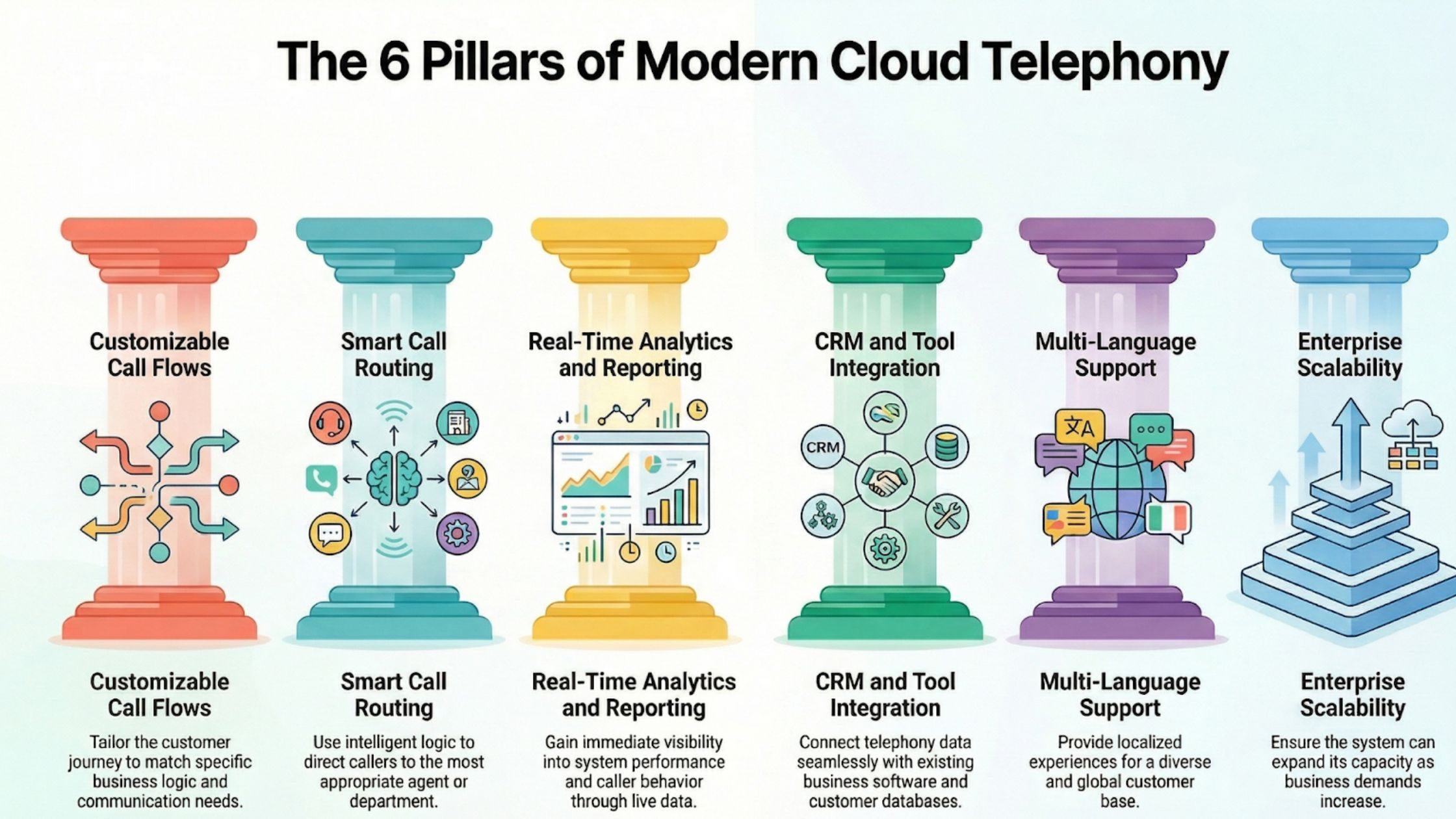
Choosing the right platform requires evaluating features that directly impact efficiency and customer experience.
1. Customizable Call Flow
Every business has unique communication needs. A flexible IVR system should allow you to design call flows that match your internal processes.
You should be able to:
- Create multi-level menus
- Set routing rules
- Adjust flows based on business hours
Customization ensures that your system evolves as your business grows.
2. Multi-Language Support
India’s diverse customer base makes language support essential. A strong IVR system in India should allow businesses to offer multiple language options.
This improves accessibility and helps customers feel more comfortable during interactions.
3. Smart Call Routing
Smart routing ensures that calls are directed to the right agent based on availability, expertise, or customer priority.
This reduces wait times and improves first-call resolution rates, which directly impacts customer satisfaction.
4. Real-Time Analytics and Reporting
Modern cloud telephony solutions provide detailed insights into call performance.
Businesses can track the following:
- Call volumes
- Peak hours
- Agent performance
- Missed calls
These insights help managers make better operational decisions.
5.CRM and Tool Integration
Integration with CRM systems allows agents to access customer data instantly during calls.
This enables more personalized conversations and reduces manual data entry, improving overall efficiency.
6. Scalability
As businesses grow, their communication needs increase. A scalable platform allows you to add users, departments, and features without disruption.
Scalability is one of the biggest advantages of cloud telephony in India.
Benefits of IVR and Cloud Telephony Solutions
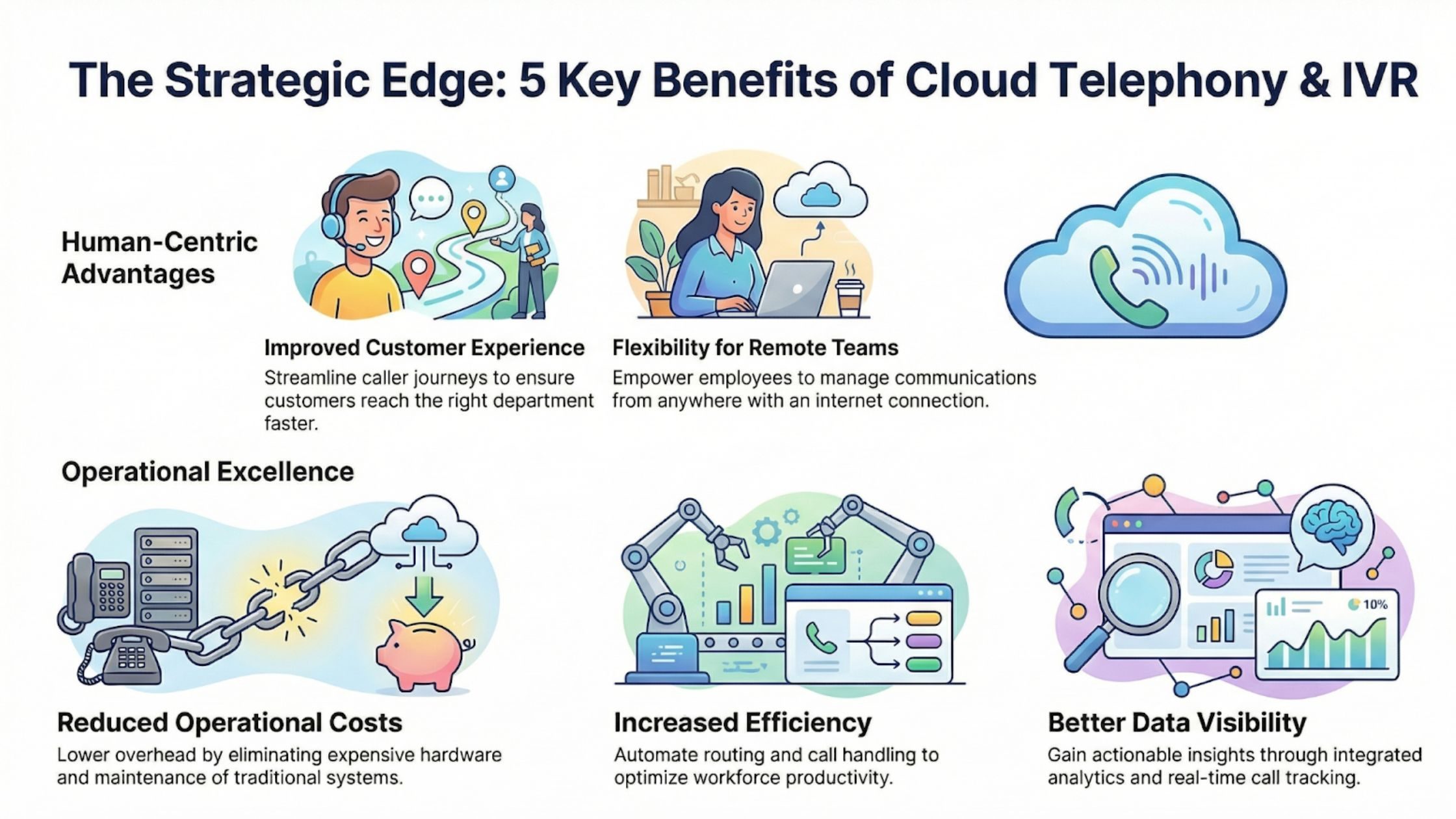
Implementing the right communication system brings measurable advantages.
1. Improved Customer Experience
Customers can quickly reach the right department without long wait times. Kommuno’s automated routing ensures faster responses and smoother interactions.
2. Reduced Operational Costs
Cloud-based systems eliminate the need for hardware and maintenance. Automation reduces the need for large support teams.
3. Increased Efficiency
Agents spend less time handling repetitive tasks and more time focusing on meaningful conversations.
4. Better Data Visibility
Real-time analytics provide valuable insights into customer behavior and team performance.
5. Flexibility for Remote Teams
Teams can manage calls from anywhere, making these solutions ideal for hybrid and remote work environments.
Which Platform Fits Your Business Best?

Choosing between different platforms depends on your business type, size, and goals.
1. Small Businesses and Startups
Startups typically require simple, cost-effective solutions that can scale over time.
A basic cloud telephony solution with IVR capabilities is usually sufficient. As the business grows, additional features can be added.
2. Growing SMEs
SMEs need more advanced features such as analytics, CRM integration, and multi-level IVR.
These businesses benefit from platforms that balance affordability with functionality.
3. Large Enterprises
Enterprises require robust systems that handle high call volumes and support multiple departments.
Advanced cloud telephony solutions with deep integration and reporting capabilities are essential for large-scale operations.
4. Customer Support-Heavy Businesses
Companies that handle high inbound call volumes should prioritize strong IVR systems and queue management features.
Efficient routing and automation significantly improve customer satisfaction.
Common Mistakes to Avoid When Choosing a Platform
Selecting the wrong solution can create long-term challenges.
One common mistake is choosing a platform based only on cost. While affordability matters, limited features can affect efficiency.
Another mistake is ignoring integration capabilities. Without proper integration, teams may face manual workloads and data inconsistencies.
Businesses should also avoid overly complex IVR menus. A complicated system can frustrate customers instead of helping them.
Testing the platform before full implementation is also important. This ensures the system meets your operational needs.
Cost Considerations for IVR and Cloud Telephony Solutions
Cost structures vary depending on features, usage, and provider.
Businesses should consider the following:
- Subscription plans
- Call charges
- Setup costs
- Feature inclusions
A transparent pricing model helps avoid unexpected expenses.
While lower-cost solutions may seem attractive, investing in a reliable platform ensures better performance and long-term value.
Future of IVR and Cloud Telephony in India
The future of cloud telephony in India is driven by automation, data insights, and customer personalization.
IVR systems are becoming more intelligent, offering smarter call routing and better customer interaction experiences.
Analytics capabilities are improving, allowing businesses to make faster and more accurate decisions.
Mobile accessibility is also expanding, enabling teams to manage communication systems from anywhere.
As technology evolves, cloud telephony solutions will continue to play a key role in business communication strategies.
Final Thoughts
Choosing the right communication platform is a critical decision for any business. A well-designed Kommuno’s IVR system ensures efficient call handling, while robust cloud telephony solutions provide the infrastructure needed for seamless communication.
With the growing adoption of cloud telephony in India, businesses now have access to scalable, flexible, and cost-effective tools that improve both customer experience and operational efficiency.
By carefully evaluating features, understanding business requirements, and avoiding common mistakes, organizations can select a platform that supports long-term growth and success.
In today’s competitive landscape, communication is more than just a necessity; it is a strategic advantage that helps businesses connect, engage, and grow.