
What should be the Checklist for selecting an IVR or Cloud Telephony Solution?
Communication is the backbone of every successful business. Whether it involves customer support, sales calls, or internal collaboration, the way companies handle communication can directly influence productivity and customer satisfaction. In recent years, businesses have increasingly moved away from traditional phone systems and adopted cloud telephony solutions that offer greater flexibility and scalability.
As digital transformation accelerates, the demand for cloud telephony in India has grown rapidly. Startups, SMEs, and large enterprises are looking for platforms that simplify call management, automate workflows, and provide detailed insights into customer interactions. However, with many options available, choosing the best cloud telephony platform can be challenging.
Each provider offers different capabilities, pricing models, and integration features. Some focus on sales automation, while others prioritize customer support or enterprise communication needs. If you are evaluating a cloud telephony service in India to improve your business communication or exploring platforms like Kommuno for modern telephony solutions, understanding the key differences between available options is essential. This guide will help you compare important features and choose the right platform for your organization’s long-term growth.
Understanding Cloud Telephony
Before comparing solutions, it’s important to understand what cloud telephony actually means.
Cloud telephony refers to a communication system that operates over the internet instead of relying on traditional telephone infrastructure. Businesses can manage calls, messages, and automated workflows through a cloud-based platform without installing physical hardware such as PBX systems.
With cloud telephony in India, companies can set up virtual phone numbers, create automated IVR menus, route calls to specific departments, and monitor call performance from a centralized dashboard. Because everything operates in the cloud, teams can access the system from multiple locations using computers, mobile devices, or web-based applications.
This flexibility makes cloud telephony particularly useful for organizations with remote teams, multiple offices, or growing customer support operations.
Why Businesses Are Adopting Cloud Telephony Solutions
The shift toward cloud telephony solutions is driven by the need for faster communication, better customer engagement, and simplified infrastructure management.
One of the primary benefits is cost efficiency. Traditional phone systems require expensive hardware installation and maintenance. Kommuno’s cloud telephony removes these requirements by hosting the communication infrastructure on remote servers.
Another advantage is scalability. Businesses can easily add users, departments, or new numbers without a complex technical setup. As companies expand, the system grows with them.
Cloud telephony also provides real-time analytics and call insights. Managers can monitor call volume, agent performance, and customer response patterns, allowing them to improve operations continuously. These benefits explain why more organizations are actively searching for the best cloud telephony platform that aligns with their operational needs.
Key Features to Compare When Choosing a Cloud Telephony Platform
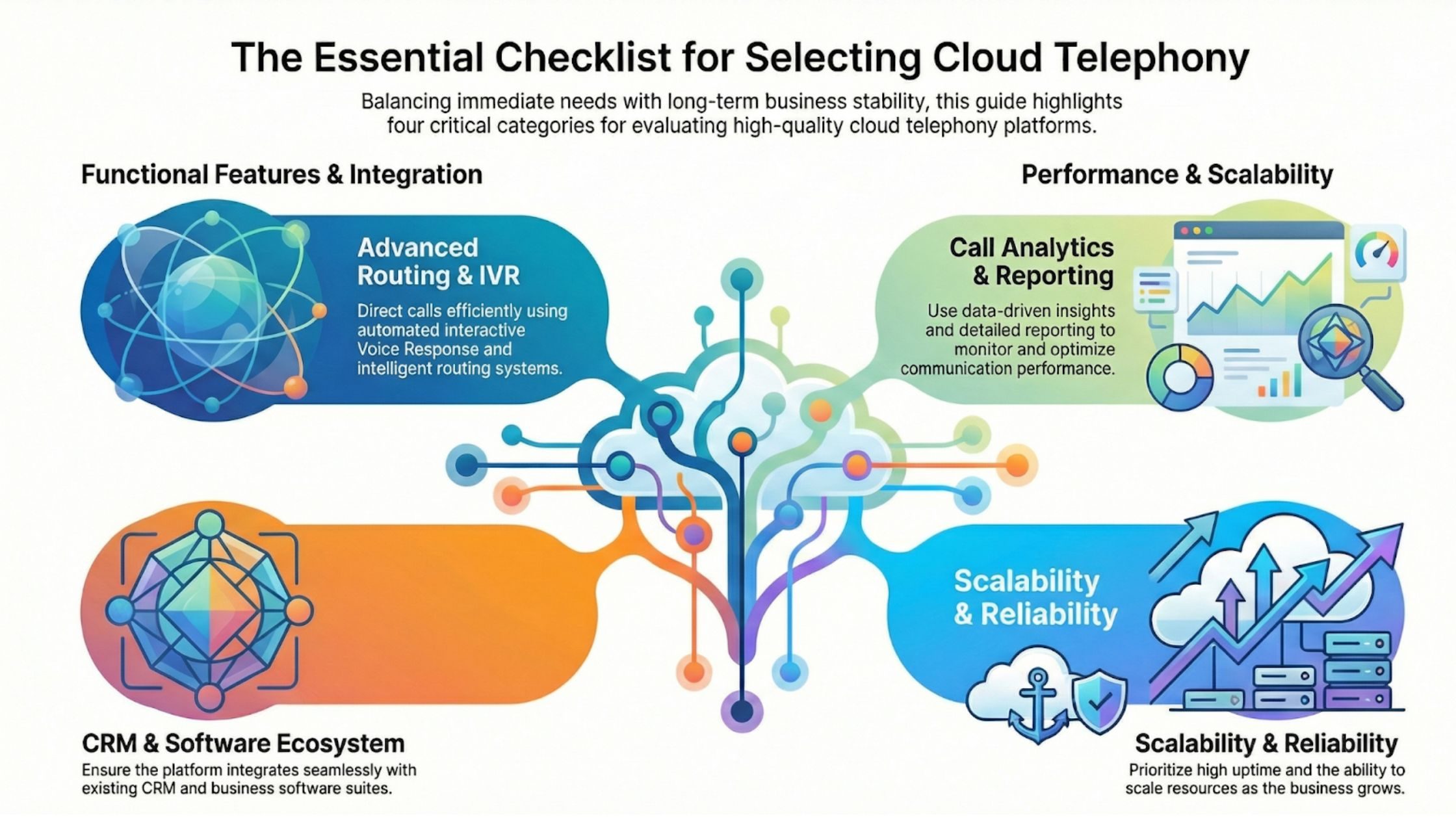
Selecting the right platform requires evaluating several important features. Businesses should consider both technical capabilities and long-term scalability when comparing solutions.
Advanced Call Routing and IVR Systems
A strong cloud telephony system should include an intelligent IVR system that guides callers to the correct department quickly.
IVR menus allow customers to navigate services using automated voice prompts. For example, callers can select options for sales, support, billing, or general inquiries.
Modern platforms offer multi-level IVR menus and customizable call flows. This flexibility ensures that customers reach the right team without unnecessary transfers or long wait times.
Effective call routing improves efficiency while enhancing the overall customer experience.
CRM and Software Integrations
One of the most valuable aspects of modern cloud telephony solutions is their ability to integrate with other business tools.
CRM integrations allow agents to access customer information during calls. Instead of manually searching for records, they can instantly view previous interactions, purchase history, and support tickets.
Integration with helpdesk software, marketing platforms, and sales tools ensures seamless communication across departments. These integrations reduce manual data entry and improve workflow efficiency.
Call Analytics and Reporting
Businesses rely on data to make better decisions. Kommuno provides detailed analytics that help managers understand communication patterns and team performance.
Analytics dashboards typically include metrics such as call volumes, average response times, missed calls, and agent activity levels. By analyzing this data, organizations can identify areas that require improvement.
For example, if call abandonment rates increase during certain hours, businesses can adjust staffing schedules to handle demand more effectively.
Scalability for Growing Businesses
A communication platform should support business growth without requiring major upgrades or infrastructure changes.
Scalable cloud telephony service providers in India allow companies to add users, departments, or locations easily. This flexibility ensures that businesses can expand operations without worrying about communication limitations.
Startups that expect rapid growth should prioritize platforms designed to scale efficiently.
Reliability and Uptime
Reliability is one of the most critical factors when choosing a communication system. Even short periods of downtime can result in missed calls, lost opportunities, and customer frustration.
The best providers invest in secure infrastructure and backup systems to maintain high uptime levels. A reliable platform ensures consistent call quality and uninterrupted communication.
Organizations evaluating cloud telephony in India should always consider uptime guarantees and service reliability.
Types of Businesses That Benefit From Cloud Telephony Platforms
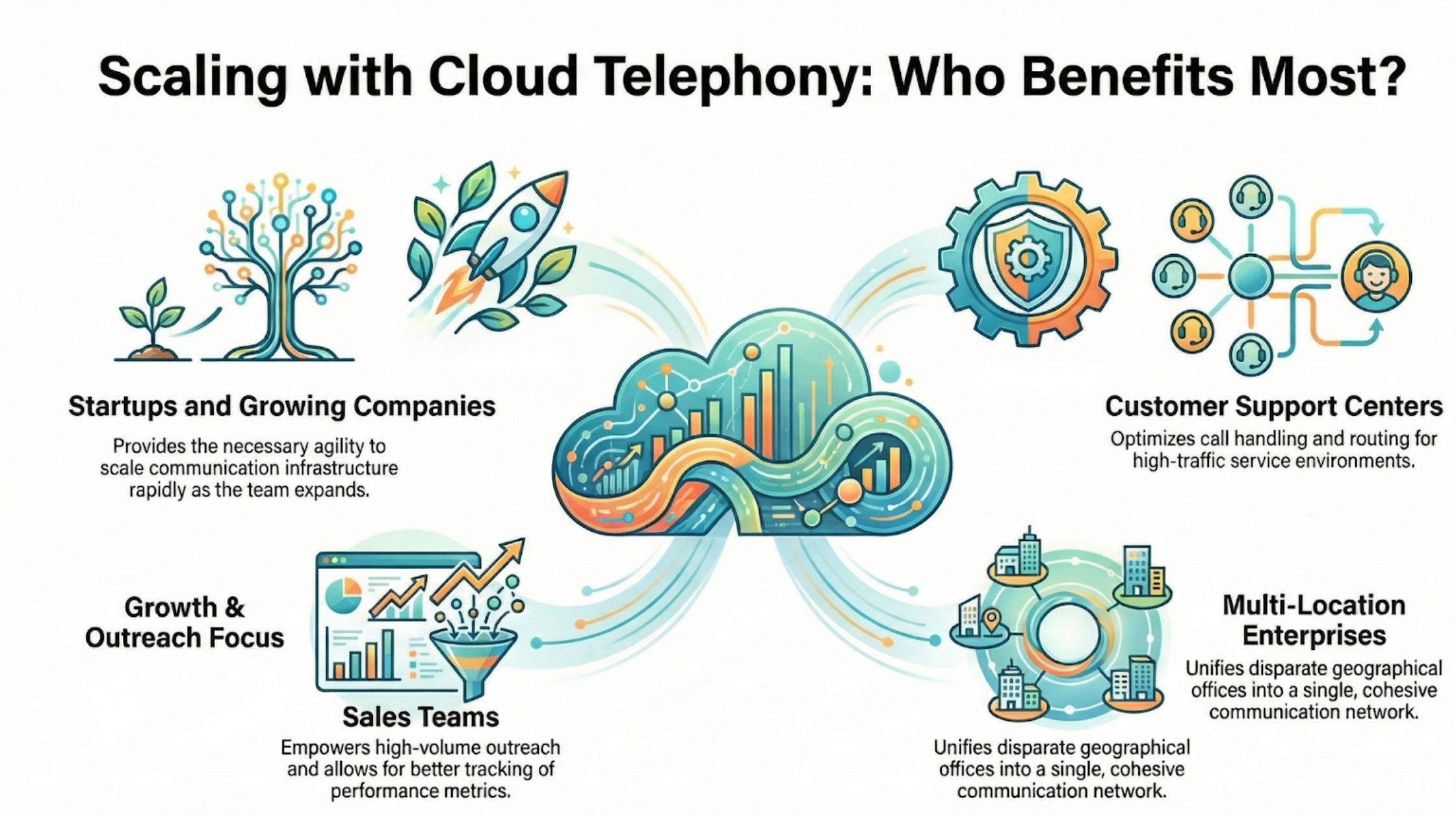
While cloud telephony can support almost any industry, certain types of businesses gain the most value from these solutions.
Startups and Growing Companies
Startups often require flexible communication tools that support rapid expansion. Cloud telephony platforms allow them to manage customer inquiries without investing in expensive hardware systems.
As the team grows, new users can be added quickly. This flexibility allows startups to maintain professional communication while scaling operations.
Customer Support Centers
Companies that manage large volumes of inbound calls benefit significantly from automated call routing and queue management features.
A well-designed system ensures that customers reach the appropriate support team quickly. This improves response times and reduces the workload on individual agents.
Sales Teams
Sales-driven organizations rely heavily on outbound communication. Kommuno’s cloud telephony platforms allow sales teams to track conversations, manage leads, and monitor campaign performance more effectively.
Managers can review call analytics to identify successful sales strategies and improve overall conversion rates.
Multi-Location Enterprises
Businesses operating across multiple cities or regions need centralized communication management. Cloud telephony platforms allow organizations to monitor calls across different offices from a single dashboard.
This centralized control ensures consistent service standards across locations.
Cost Considerations When Choosing Cloud Telephony Solutions
While evaluating different platforms, businesses should carefully analyze pricing structures.
Most providers offer subscription-based plans that vary depending on the number of users, call volume, and available features. Some plans include essential capabilities such as call recording and IVR setup, while others may charge additional fees for advanced features.
It is important to consider both short-term and long-term costs. A cheaper platform might lack the scalability or analytics capabilities needed for future growth.
Organizations searching for a cloud telephony service in India should focus on transparent pricing models that align with their operational requirements.
Common Mistakes Businesses Make When Choosing a Platform

Selecting the wrong platform can lead to inefficiencies and unnecessary costs. Businesses should avoid several common mistakes during the evaluation process.
One common mistake is focusing only on price instead of functionality. While budget considerations are important, choosing a platform with limited features may create operational challenges later.
Another mistake is ignoring integration capabilities. Without proper integrations, teams may need to manually update customer records after every call, which reduces efficiency.
Businesses should also conduct proper testing before full deployment. Running pilot campaigns helps identify potential technical issues and ensures the platform meets operational expectations.
Future Trends in Cloud Telephony in India
The future of cloud telephony in India is being shaped by rapid technological advancements and increasing customer expectations.
Automation is becoming a central feature of modern communication platforms. Intelligent call routing and automated workflows allow businesses to handle high call volumes without overwhelming support teams.
Personalized communication is another emerging trend. Cloud telephony systems are increasingly integrating customer data to deliver tailored interactions during calls.
Analytics capabilities are also becoming more advanced. Businesses now have access to real-time dashboards that provide detailed insights into communication performance.
Mobile accessibility continues to grow as well. Many platforms now offer mobile applications that allow agents and managers to manage calls and monitor reports from anywhere.
These developments are making cloud telephony solutions more powerful and accessible for businesses of all sizes.
Final Thoughts
Choosing the best cloud telephony platform is a crucial decision for any organization that relies on efficient communication. With the increasing adoption of cloud telephony in India, businesses now have access to advanced tools that simplify call management and enhance customer engagement.
A reliable cloud telephony service in India should provide scalable infrastructure, intelligent call routing, detailed analytics, and seamless integration with other business systems. These capabilities enable organizations to deliver better customer experiences while improving operational efficiency.
By carefully comparing available cloud telephony solutions and prioritizing Kommuno’s features that support long-term growth, businesses can build a communication system that adapts to changing needs and supports future expansion.
In today’s competitive environment, communication is more than just answering calls; it is a strategic advantage that helps businesses build stronger relationships, improve productivity, and achieve sustainable growth.