
Best Knowlarity Alternatives for Growing Businesses in 2026
As businesses in India continue to digitize operations, communication systems are becoming a strategic part of growth. From managing customer inquiries to supporting sales outreach and customer support teams, companies now rely heavily on cloud-based calling infrastructure. While Knowlarity has long been a well-known platform in the industry, many organizations are now exploring Knowlarity alternatives that better match their evolving needs.
Growing startups, SMEs, and enterprises are increasingly looking for more flexible platforms, stronger integrations, improved analytics, and better pricing models. With the rapid adoption of cloud telephony in India, businesses now have access to a wide range of modern solutions that can streamline customer communication and internal collaboration.
If you are considering upgrading your communication infrastructure, comparing Kommuno’s Knowlarity alternatives can help you identify platforms that offer better scalability, advanced automation, and stronger performance. This guide explores why companies switch providers, what features to prioritize, and how to choose the right cloud telephony solution in India for long-term success.
Why Businesses Look for Knowlarity Alternatives
Companies usually don’t change communication providers without a strong reason. However, as organizations scale and customer expectations evolve, limitations in existing systems can begin to affect operations.
One of the most common reasons businesses explore Knowlarity alternatives address the need for greater flexibility. Growing teams often require customizable call flows. advanced IVR routing, and integrations with CRM or support tools. When these capabilities are limited, businesses begin searching for platforms that provide better control over communication workflows.
Another factor is scalability. As businesses expand across cities or increase call volumes, they require systems that can support larger teams and multiple departments without disruption. A modern cloud telephony solution in India should allow companies to add users, departments, or campaigns easily.
Cost transparency also plays an important role. Businesses want predictable pricing structures that align with their operational budgets. Platforms that offer clear plans and scalable features are often preferred by fast-growing organizations.
Ultimately, businesses seek alternatives because communication infrastructure must evolve alongside growth.
Understanding Cloud Telephony in India
Before exploring alternatives, it’s important to understand how cloud telephony in India works and why it has become so widely adopted.
Cloud telephony allows businesses to manage calls using internet-based systems instead of traditional hardware-based phone lines. Instead of installing physical PBX equipment, companies can operate their entire communication system through cloud-hosted platforms.
This approach offers several advantages. Businesses can easily set up virtual phone numbers, create automated call routing, manage call recordings, and track performance analytics through online dashboards. Teams can access the system from anywhere, making it ideal for remote or hybrid work environments.
Another major component of cloud telephony is the IVR system in India. Interactive Voice Response systems guide callers through automated menus and direct them to the appropriate department or agent. A well-designed IVR reduces wait times, improves call handling efficiency, and ensures customers reach the right support channel quickly.
Because of these benefits, cloud telephony has become the backbone of modern customer communication for businesses across India.
Key Features to Look for in Knowlarity Alternatives
When evaluating different providers, businesses should look beyond brand recognition and focus on practical features that improve operational efficiency.
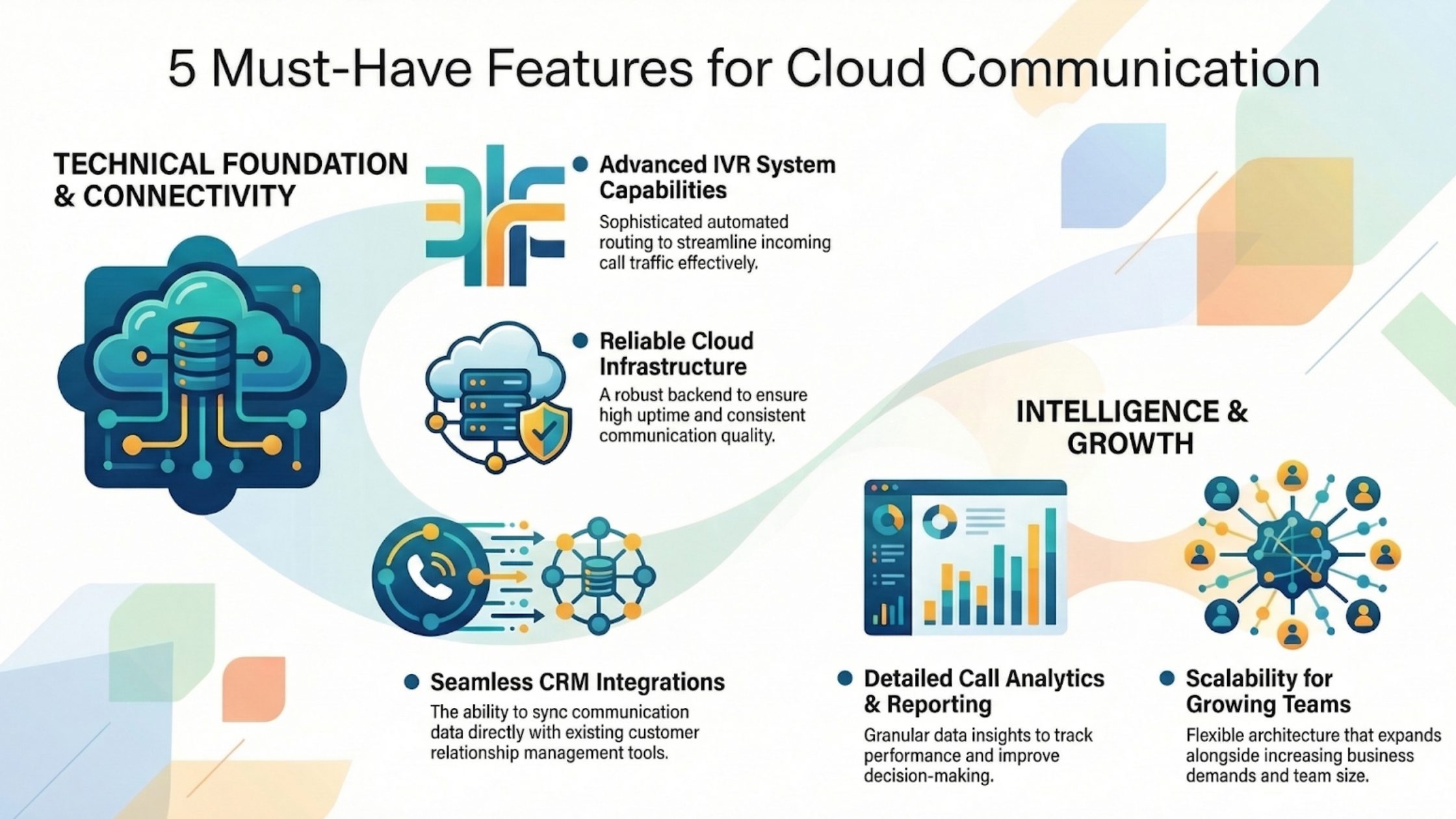
Advanced IVR System Capabilities
A strong IVR system in India should allow businesses to create customizable call flows that match their internal structure. Multi-level menus, department-based routing, and time-based call handling are essential for managing large call volumes.
Language support is another important factor in India’s diverse market. Offering regional language options within IVR menus improves accessibility and enhances customer experience.
Modern IVR systems also support smart routing rules. Calls can be directed based on customer data, previous interactions, or agent availability, ensuring faster resolution and reduced wait times.
Reliable Cloud Infrastructure
Reliability is one of the most critical factors when choosing a cloud telephony solution in India. Kommuno’s communication platforms must ensure high uptime, stable call quality, and consistent performance during peak call volumes.
A reliable system ensures that businesses never miss important customer inquiries due to technical disruptions. Providers that maintain robust infrastructure and redundancy measures are generally more dependable for long-term operations.
Seamless CRM Integrations
Businesses today rely on multiple tools to manage sales pipelines, customer support, and marketing campaigns. Integrating communication platforms with CRM systems allows teams to access customer data instantly during calls.
With proper integration, agents can view past conversations, track support requests, and log call outcomes automatically. This eliminates manual work and allows agents to provide more personalized and efficient service.
Detailed Call Analytics and Reporting
Data-driven insights help businesses improve performance and optimize customer engagement strategies. Advanced cloud telephony platforms provide dashboards that display call volumes, agent performance, response times, and missed call reports.
These analytics help managers identify peak call hours, evaluate team productivity, and adjust staffing levels accordingly. Access to real-time insights enables organizations to continuously improve their communication processes.
Scalability for Growing Teams
One of the primary reasons businesses search for Kommuno’s Knowlarity alternatives is scalability. A communication platform should support growth without requiring major technical changes.
Whether a company adds new departments, hires additional agents, or launches new campaigns, the system should adapt easily. A scalable cloud telephony solution in India ensures long-term flexibility and cost efficiency.
Kommuno: The Next-Gen Cloud Telephony Leader for 2026
As businesses transition away from rigid legacy systems, Kommuno has emerged as the premier Knowlarity alternative by focusing on “Intelligence-First” communication. Unlike traditional platforms, Kommuno integrates advanced AI-driven call routing and real-time sentiment analysis directly into its core infrastructure. This allows growing Indian enterprises to not only manage high call volumes but to understand the intent behind every interaction. With a focus on ultra-low latency, 99.9% uptime, and a “zero-code” IVR builder, Kommuno empowers teams to deploy complex communication workflows in minutes rather than days. It bridges the gap between basic cloud telephony and a full-scale digital CX (Customer Experience) platform, making it the go-to choice for companies prioritizing both technical excellence and cost transparency.
Types of Businesses That Benefit From Switching Providers
Different industries rely on communication systems in unique ways. However, several types of organizations benefit significantly from exploring alternatives.
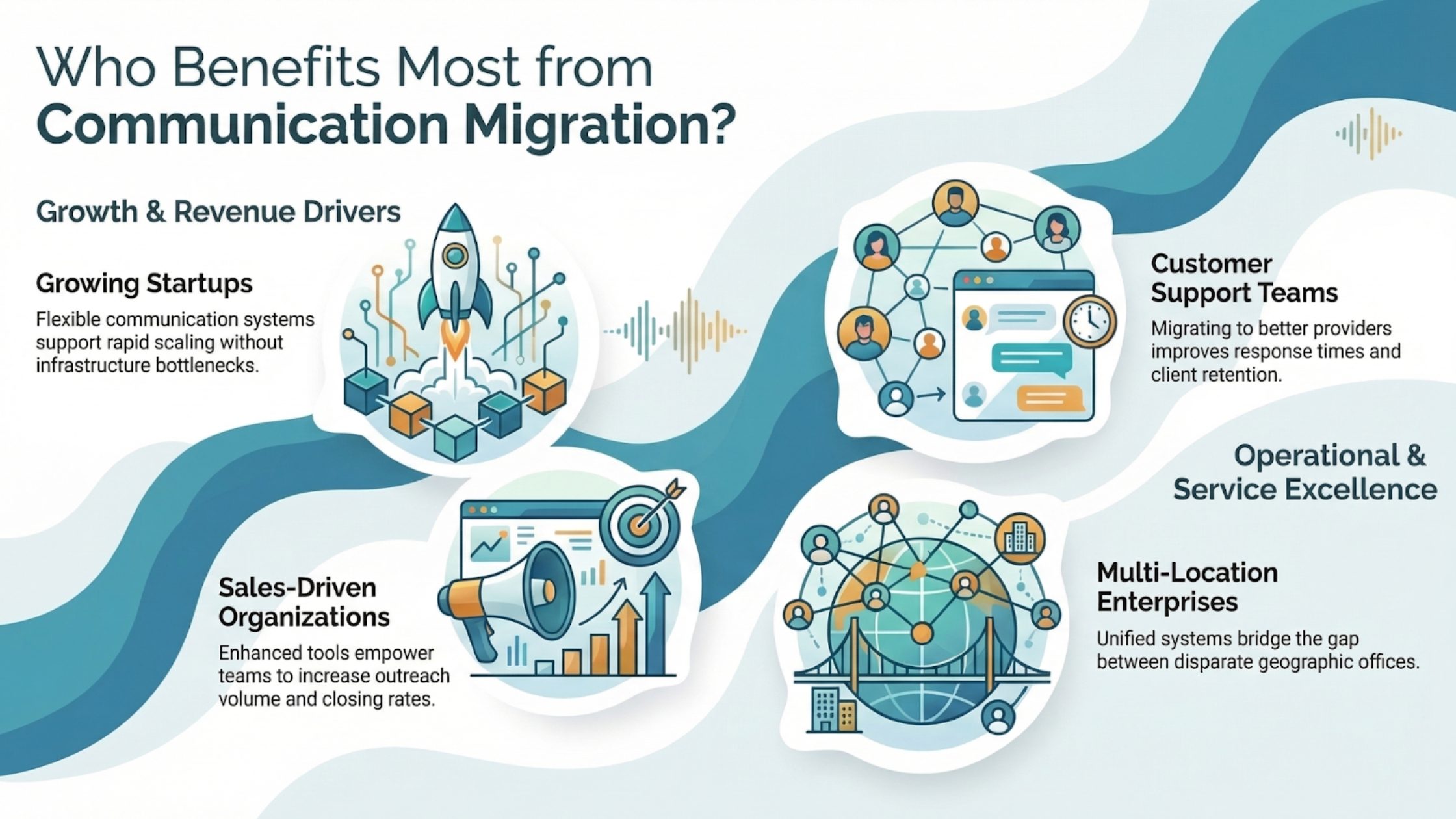
Growing Startups
Startups often begin with basic communication tools but quickly outgrow them as operations expand. As call volumes increase, they require more structured systems with automated routing, analytics, and integration capabilities.
Switching to a more advanced cloud telephony solution in India allows startups to maintain professional customer communication while scaling operations efficiently.
Sales-Driven Organizations
Companies that rely heavily on outbound calls benefit from platforms that support campaign management and dialing automation. A better communication system allows sales teams to handle higher call volumes while tracking performance metrics effectively.
Improved analytics also help managers refine sales strategies and increase conversion rates.
Customer Support Teams
Organizations that handle large volumes of inbound customer inquiries require reliable call management tools. Features such as queue management, call recording, and multi-level IVR ensure efficient handling of support requests.
A well-structured IVR system in India ensures that customers reach the right support team quickly, reducing wait times and improving satisfaction.
Multi-Location Enterprises
Businesses operating in multiple cities often need centralized communication management. Cloud telephony platforms allow companies to monitor calls across all branches from a single dashboard.
This unified visibility helps maintain service consistency and operational control across locations.
Cost Considerations When Choosing a Cloud Telephony Solution
Cost plays a significant role when evaluating alternatives, but businesses should look beyond the monthly subscription fee.
Different providers structure pricing based on factors such as the number of users, call volume, feature access, and integrations. It is important to understand whether essential features like call recording, analytics, and IVR customization are included in the plan or charged separately.
Businesses should also consider call rates for inbound and outbound communication. Transparent pricing ensures that companies can accurately forecast operational expenses.
While lower pricing may appear attractive initially, a slightly higher investment in a reliable cloud telephony solution in India can provide better scalability, performance, and support in the long run.
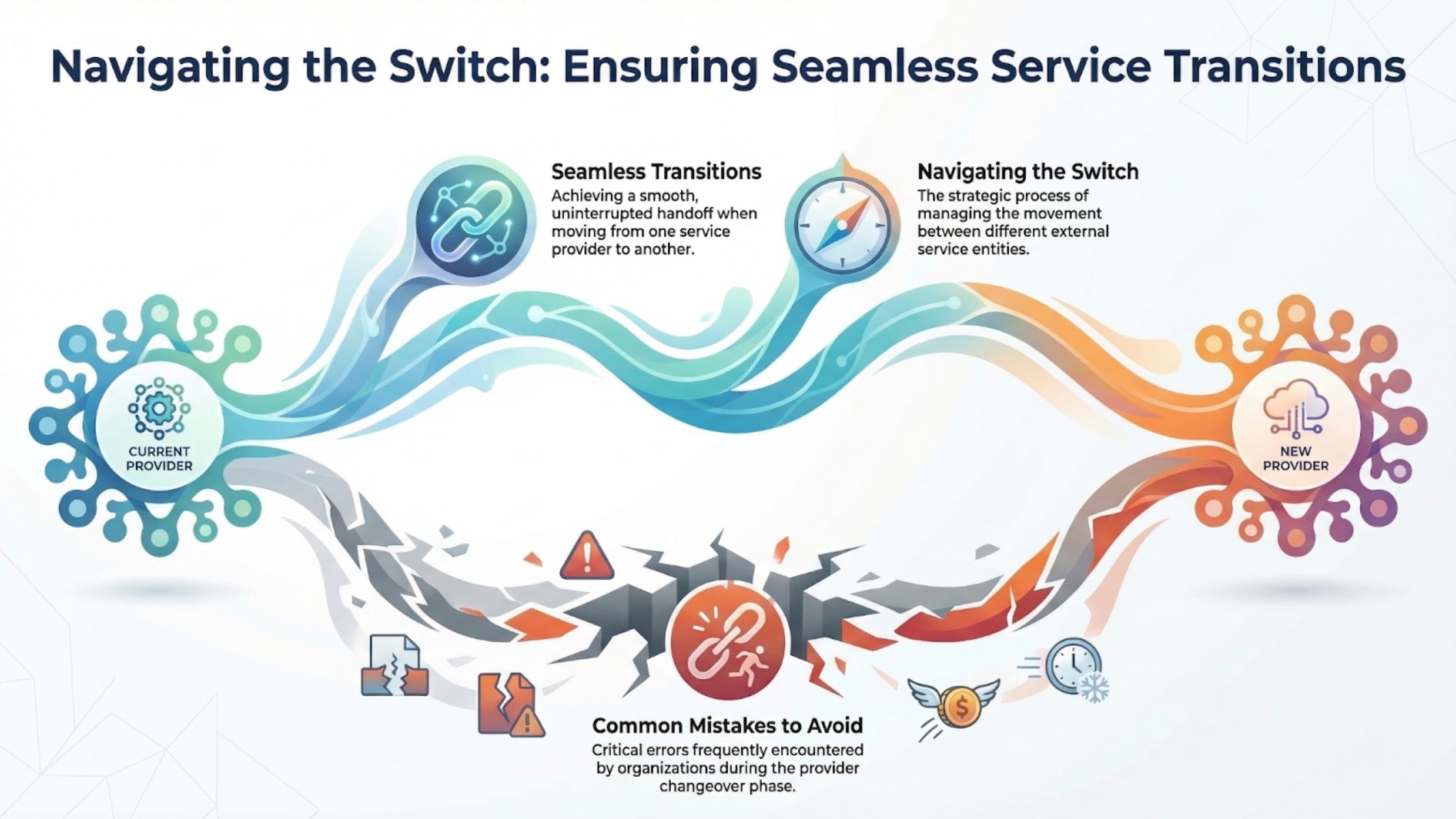
Common Mistakes to Avoid When Switching Providers
Switching communication platforms requires careful planning. Without proper preparation, businesses may experience temporary disruptions.
One common mistake is failing to review existing call flows before migration. Understanding current workflows helps ensure the new system replicates or improves existing processes.
Another mistake is neglecting team training. Even the most advanced communication platforms require proper onboarding to ensure agents use them effectively.
Businesses should also conduct pilot testing before full implementation. Testing helps identify potential configuration issues and ensures the new system performs as expected.
Future of Cloud Telephony in India
The future of cloud telephony in India is closely tied to automation, artificial intelligence, and deeper data integration. Businesses are increasingly adopting tools that enhance customer engagement while reducing manual workload.
Kommuno’s advanced IVR systems are evolving to support smarter routing based on customer behavior and interaction history. Personalized call experiences will become a key differentiator for customer-focused organizations.
Analytics capabilities are also improving, allowing companies to track performance metrics in greater detail and make faster operational decisions.
Mobile accessibility is another growing trend. Communication platforms are expanding mobile features so managers and agents can monitor operations and handle calls from anywhere.
These advancements will make cloud telephony an even more powerful tool for businesses seeking efficient and scalable communication solutions.
Final Thoughts
Exploring Knowlarity alternatives is not simply about replacing one platform with another; it’s about upgrading your business communication strategy. As customer expectations grow and operational complexity increases, organizations need systems that support flexibility, automation, and scalability.
A reliable cloud telephony solution in India provides the infrastructure needed to manage customer interactions efficiently while supporting business growth. When combined with a well-designed IVR system in India, it allows businesses to deliver faster responses, improve service quality, and maintain professional communication at scale.
By evaluating available options carefully and prioritizing features that align with long-term goals, companies can implement a communication system that drives productivity, improves customer satisfaction, and supports future expansion.
In a rapidly evolving digital landscape, choosing the right communication platform is not just an operational decision; it’s a strategic investment in your business’s growth and success.