
What is RCS Messaging and How Does It Differ from SMS & WhatsApp?
Mobile messaging has come a long way from simple text alerts to rich, interactive conversations. For years, businesses relied on SMS for customer communication, while messaging apps like WhatsApp added a more conversational layer. Now, a new standard known as RCS messaging is changing how businesses and customers interact through native mobile messaging.
RCS, or Rich Communication Services, aims to modernize traditional text messaging by adding features that users expect from modern chat applications while still working within the default messaging app on smartphones. As awareness grows, RCS messaging in India is gaining attention among businesses looking for better engagement without forcing customers to download new apps.
This blog explains what RCS messaging is with Kommuno, how it works, and how it differs from SMS and WhatsApp in real-world usage.
Understanding RCS Messaging
RCS messaging is an upgraded messaging protocol designed to replace traditional SMS. Unlike SMS, which is limited to plain text, RCS supports rich media, interactivity, and real-time features.
Instead of relying on third-party messaging apps, RCS works through the default messaging app on supported Android devices. This means users don’t need to install anything extra to receive RCS messages, as long as their device and network support it. At its core, RCS messaging is about making business and personal conversations more engaging, informative, and interactive, without moving away from native messaging.
What Are Rich Communication Services?
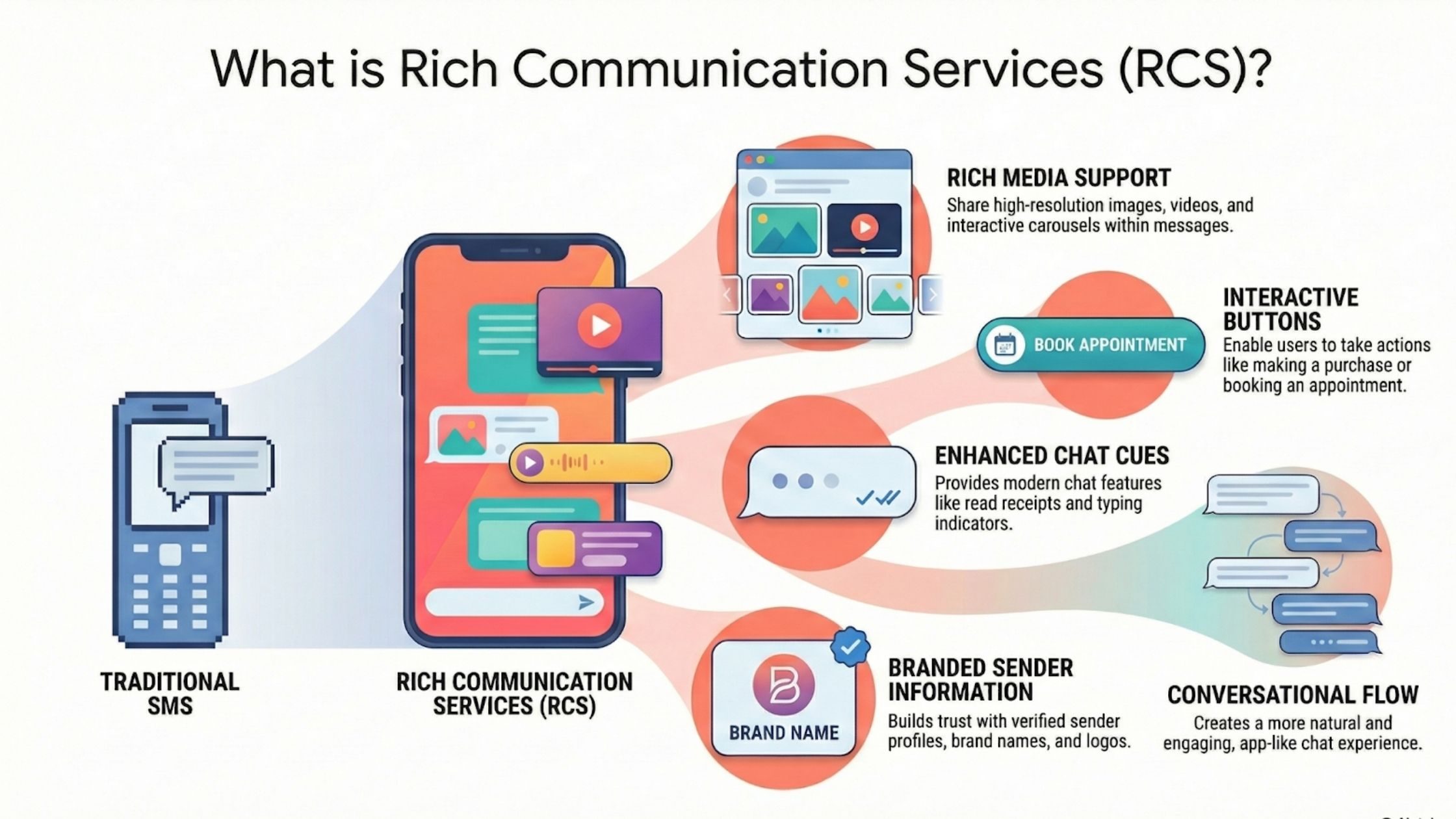
Rich Communication Services is the technical standard behind RCS messaging. It defines how messages are sent, received, and displayed with advanced features.
Some key characteristics of Rich Communication Services include:
- Support for images, videos, and carousels
- Interactive buttons for actions
- Read receipts and typing indicators
- Branded sender information
- More conversational message flow
These features bridge the gap between basic SMS and full-featured chat applications.
Why RCS Was Introduced
Traditional SMS was designed decades ago when mobile phones were limited. As smartphones evolved, SMS remained unchanged, while messaging apps introduced richer experiences.
RCS was introduced to:
- Modernize mobile messaging
- Improve engagement
- Enable interactive communication
- Keep messaging within native apps
For businesses, this means a new way to communicate without losing the reach of SMS.
How RCS Messaging Works
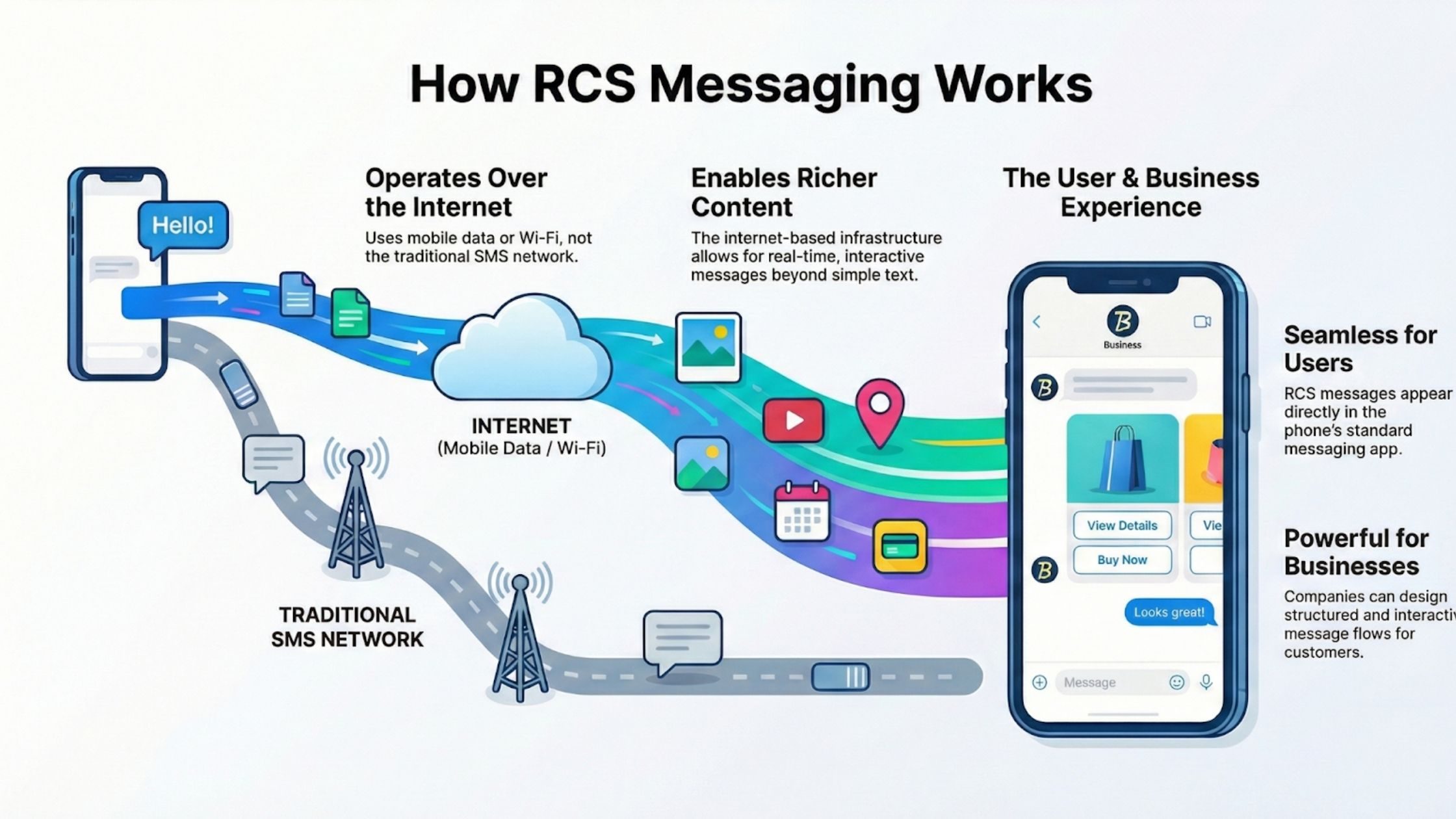
RCS messaging works over mobile data or Wi-Fi instead of the traditional SMS network. Messages are delivered through an internet-based infrastructure, allowing richer content and real-time interaction.
From a user’s perspective, RCS messages appear in the same messaging app they already use. From a business perspective, RCS provides tools to design structured, interactive message flows. This seamless experience is one of the main advantages of RCS messaging.
RCS Messaging vs SMS: Key Differences
Although RCS builds on the idea of SMS, the two are fundamentally different.
1. Message Content
SMS is limited to text and a fixed character count. RCS supports images, videos, GIFs, and interactive elements.
2. Interactivity
SMS messages are static. RCS messages can include buttons, quick replies, and action options.
3. Branding
SMS usually shows a numeric sender ID. RCS allows branded sender names, logos, and verified business profiles.
4. Delivery Feedback
SMS offers limited delivery information. RCS provides read receipts and real-time status updates.
5. User Experience
SMS feels transactional. RCS feels conversational and engaging.
RCS Messaging vs WhatsApp: Key Differences
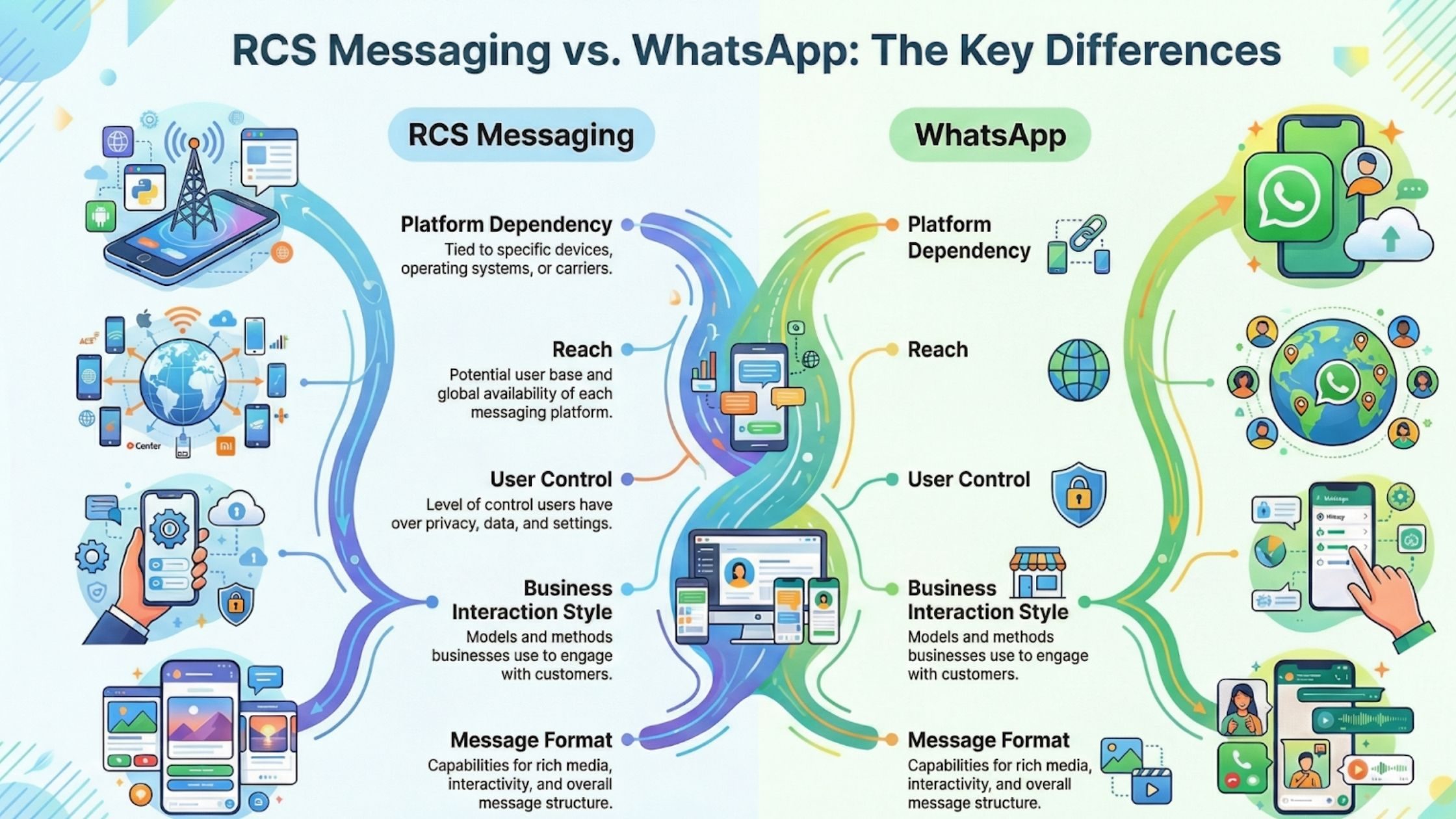
WhatsApp is one of the most popular messaging platforms in India, but it operates differently from RCS.
1. Platform Dependency
WhatsApp requires users to download and register on the app. RCS works within the native messaging app on supported devices.
2. Reach
WhatsApp only reaches users with the app installed. RCS can reach users directly through their phone’s default messaging app.
3. User Control
WhatsApp users must opt in and share their number. RCS messages are tied to the phone number and carrier support.
4. Business Interaction Style
WhatsApp feels informal and conversational. RCS offers a structured, branded experience.
5. Message Format
Both support rich media, but RCS emphasizes interactive templates and buttons designed for business communication.
Each channel serves different use cases, and many businesses use both.
RCS Messaging in India: Current Adoption Landscape
India’s mobile-first population makes it an ideal environment for RCS adoption. Android devices dominate the smartphone market, which aligns well with RCS support.
Businesses in India are exploring RCS messaging for:
- Customer notifications
- Transaction updates
- Appointment reminders
- Promotional campaigns
However, adoption depends on factors such as device compatibility, network support, and customer awareness.
Benefits of RCS Messaging for Businesses
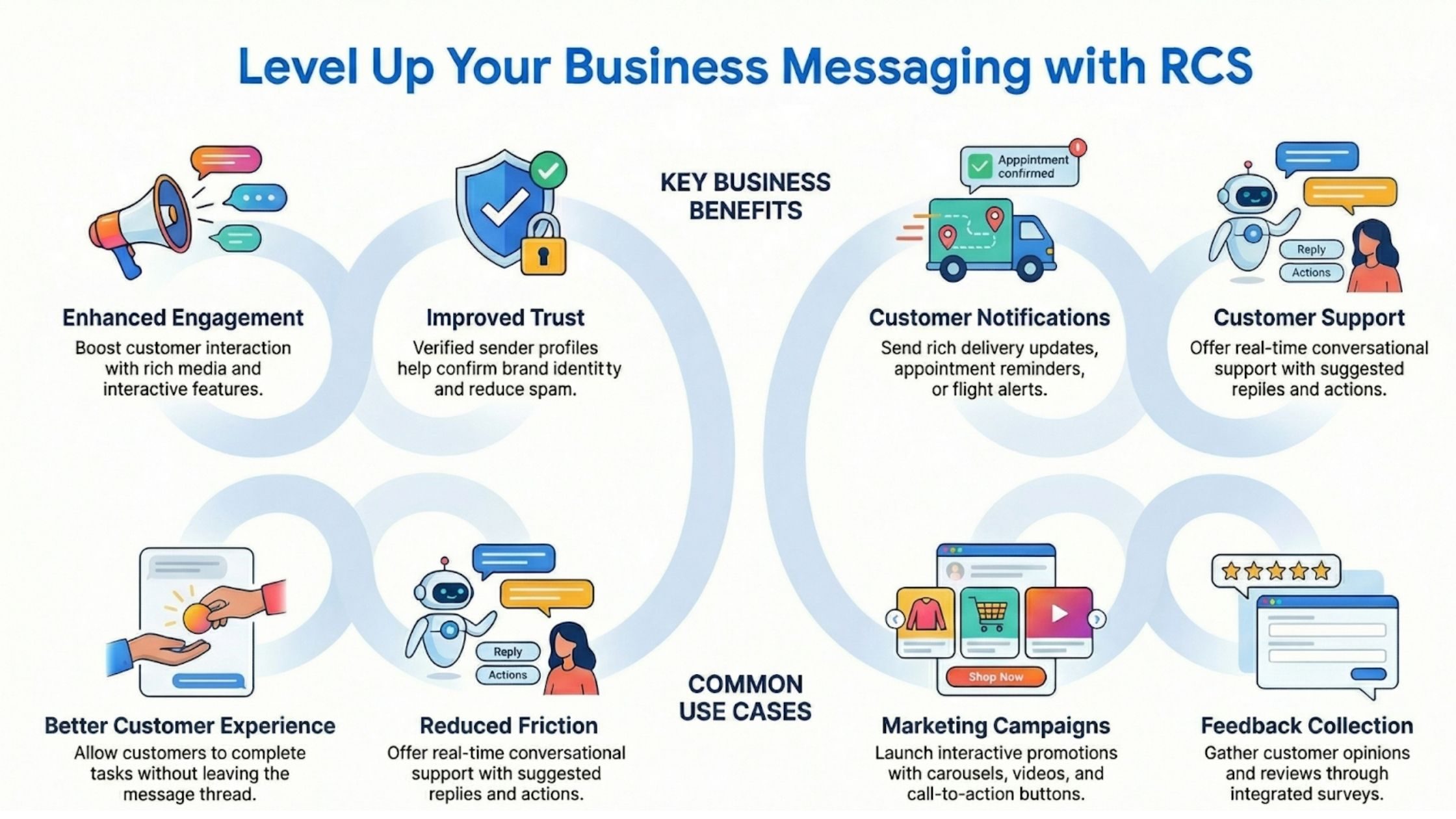
Kommuno’s RCS messaging offers several advantages over traditional messaging methods.
1. Enhanced Engagement
Rich visuals and interactive buttons encourage users to engage with messages instead of ignoring them.
2. Improved Trust
Verified sender profiles and branding reduce the risk of spam perception.
3. Better Customer Experience
Clear information, quick actions, and conversational flow make interactions smoother.
4. Reduced Friction
Customers don’t need to install new apps or learn new interfaces.
Use Cases for RCS Messaging
RCS messaging supports a variety of business scenarios.
1. Customer Notifications
Order confirmations, delivery updates, and service alerts become more informative with visuals and buttons.
2. Customer Support
Interactive options allow users to select issues or request assistance without long message threads.
3. Marketing Campaigns
Rich cards and carousels make promotions more engaging than plain text messages.
4. Feedback Collection
Buttons and quick replies simplify surveys and feedback requests.
How RCS Fits into a Multi-Channel Strategy
Kommuno’s RCS messaging works best as part of a broader communication strategy. Instead of replacing SMS or WhatsApp entirely, it complements them.
A typical approach includes:
- SMS for universal reach
- RCS for rich, interactive experiences
- WhatsApp for conversational support
This layered strategy ensures maximum coverage and flexibility.
Privacy and Security Considerations
RCS messaging includes improved security features compared to SMS, such as encrypted connections in certain scenarios. However, security standards may vary depending on implementation.
Businesses must follow data protection regulations and respect user consent when using RCS messaging.
Future Outlook for RCS Messaging in India
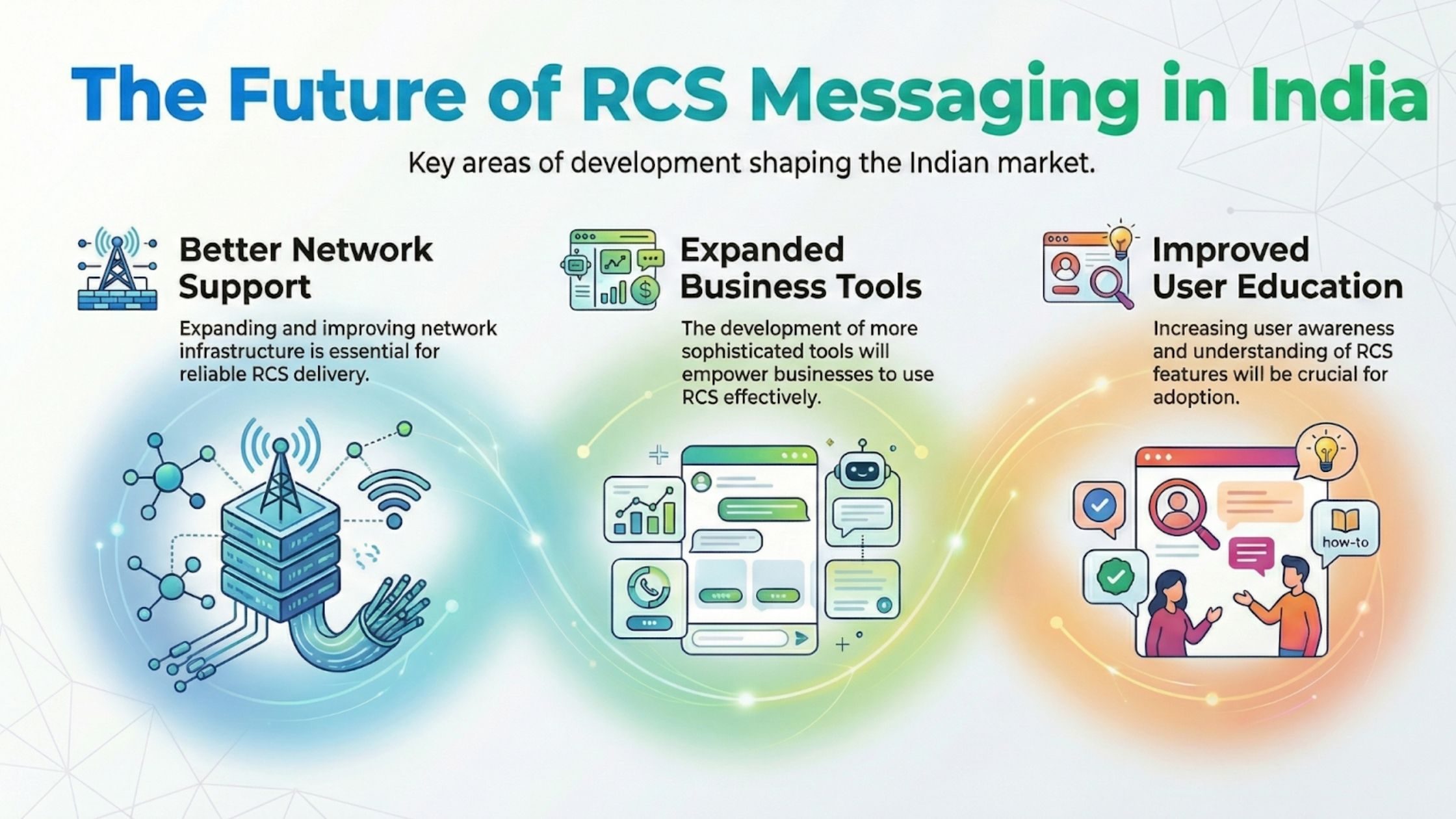
As device compatibility increases and awareness grows, RCS messaging in India is expected to play a larger role in business communication.
The focus will likely be on
- Better network support
- Expanded business tools
- Improved user education
Over time, RCS could become a standard messaging option alongside SMS and WhatsApp.
Choosing the Right Messaging Channel
No single messaging channel fits every business need. Choosing between SMS, WhatsApp, and RCS depends on:
- Target audience
- Communication goals
- Device compatibility
- Message complexity
Understanding these factors helps businesses design effective messaging strategies.
Why RCS Messaging Matters Today
RCS messaging represents the evolution of traditional mobile communication. It offers richer experiences without sacrificing the simplicity and reach of native messaging.
For businesses seeking better engagement without forcing customers onto new platforms, RCS provides a promising option.
Conclusion
RCS messaging, powered by Rich Communication Services, is transforming how businesses communicate through mobile messaging. By combining the reach of SMS with the interactivity of modern chat apps, it creates a balanced communication channel.
In the context of RCS messaging in India, the technology holds strong potential due to widespread smartphone usage and growing demand for better customer engagement. While it may not replace SMS or WhatsApp entirely, Kommuno’s RCS adds a powerful new layer to the messaging ecosystem.
As businesses continue to explore smarter communication methods, understanding how RCS differs from SMS and WhatsApp is the first step toward building more effective, customer-friendly messaging strategies.